His Arm Feels Dead — And The Answer To Whether That's Normal Changes Everything About What You Do Next
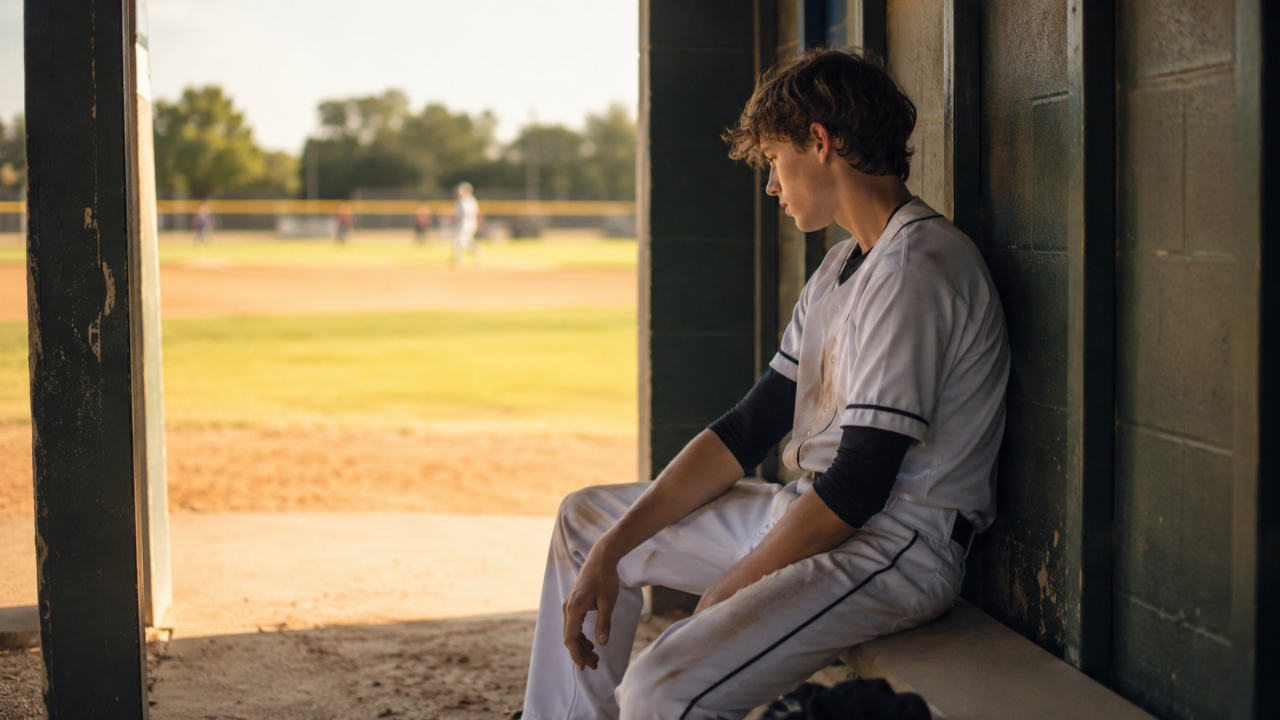
Monday morning after a heavy weekend. You ask how the arm feels. He shrugs — "it just feels dead." Flat. Heavy. Doesn't have its usual life to it.
And you're standing there trying to figure out if that's what hard work feels like or if it's the thing you've been quietly worried about.
Most parents hear "dead arm" and don't know what to do with it. It's one of the most common phrases in youth baseball — and one of the most under-explained. It can mean normal fatigue the arm needs 48 hours to shake off, or it can be a signal that something more specific is happening. The difference between those two matters a lot for what the next few days of throwing should look like.
I'm Joey Myers. I built VeloRESET because "dead arm" is one of those phrases every youth baseball family hears — and almost nobody explains in a way that tells you what to actually do about it.
"He pitched Saturday and Sunday. Monday morning he said his arm just felt dead. I didn't know if that meant he needed a rest day or if I should be calling the doctor."
— Parent of a 14-year-old travel ball pitcher
What does "dead arm" actually mean in baseball?
"Dead arm" is an informal term for a state of arm fatigue in which the arm loses velocity, feels heavy, and produces less than its normal output — without localized pain being the primary complaint. The arm doesn't feel like it hurts so much as it feels like it isn't there.
For most youth pitchers, dead arm after a heavy outing or a back-to-back weekend is a fatigue phenomenon — the muscles and soft tissues responsible for generating and decelerating throwing force are depleted, and the arm communicates that depletion through reduced output and a heavy, flat feeling. It's the arm's version of leg soreness after a hard run.
There is also a more specific clinical term — "dead arm syndrome" — which refers to transient arm paralysis or numbness that occurs during or immediately after a single throw, typically from anterior shoulder instability. That's a different, rarer presentation involving a neurological component, and it always warrants evaluation. If "dead arm" means the arm went temporarily numb or lost function during a throw (rather than just feeling heavy and fatigued after throwing), that's the category to understand — and a provider visit is the right next step, not this post.
For the overwhelming majority of families Googling "dead arm" the Monday after a tournament, they're dealing with fatigue. That's the version this post addresses. For a broader overview of what dead arm means in youth pitchers, that page covers the landscape; this post focuses on what you do with it this week.
Is dead arm normal for youth pitchers — or is it a sign something is wrong?
Dead arm fatigue is a normal response to accumulated throwing load — it's what the arm does when recovery demand has exceeded recovery supply. It is not automatically a sign something is wrong. But "normal" has limits, and those limits matter for what you do next.
Normal dead arm: diffuse, spread across the arm broadly, present after a heavy session or a back-to-back weekend, and meaningfully better within 24–72 hours of genuine rest. The arm worked hard. It's telling you it needs space. That's a Yellow signal — worth noticing, not worth alarming yourself over. Give the arm what it's asking for.
Not-normal dead arm: doesn't improve after 48–72 hours of genuine rest, comes back immediately even with reduced throwing, is accompanied by a specific painful point the pitcher can locate, or involves any numbness or tingling. Those patterns are telling you something different — and they deserve a different response than a rest day.
The single most useful question is: does the arm recover on a normal timeline? Fatigue that resolves is fatigue. Fatigue that doesn't is a signal to take more seriously.
What is the difference between dead arm fatigue and a dead arm injury?
Dead arm fatigue is diffuse, generalized, and responsive to rest — the arm feels heavy across a broad area, velocity drops across the board, and 48–72 hours of genuine rest produces meaningful improvement. Dead arm from an underlying injury is localized, often involves a specific pain point, and doesn't respond to rest in the same way.
The practical distinction comes down to three things:
Location. Pure fatigue doesn't have an address — it's the whole arm, or the whole shoulder area, without one specific spot that hurts. An injury usually does have an address. The pitcher can point to it with one finger. If the arm "feels dead" and you ask him to show you exactly where, a diffuse gesture ("just everywhere") is fatigue. A precise location — inner elbow, top of the shoulder, back of the shoulder — is a different conversation.
Recovery response. Fatigue gets better with rest. Genuine injury doesn't fully resolve with rest alone, or may feel temporarily better only to return when throwing resumes. If 48 hours of rest produces a meaningful improvement in how the arm feels and how it performs, you're dealing with fatigue. If the arm comes back from a rest day feeling roughly the same as it did the morning after the heavy outing, that's worth taking more seriously.
Numbness or tingling. Pure fatigue doesn't produce numbness or tingling. If the arm felt numb, went temporarily weak during a throw, or produced any pins-and-needles sensation in the hand or forearm, that's a neurological signal — not a fatigue signal — and it warrants evaluation before the arm throws again.
Why does a youth pitcher's arm feel heavy even when the pitch count looks fine?
Because pitch counts measure single-game volume — and the arm experiences the full week's throwing load, not just the game's.
A pitcher who throws 40 pitches at practice Monday, long toss Tuesday, skips Wednesday, bullpens Thursday at 30% effort, then hits his per-game pitch limit on Saturday and pitches again Sunday has stayed within every per-game pitch count guideline. The arm experienced none of that as separate events. It accumulated all of it. The pitch count on Saturday looks reasonable. The total arm load for the week may not be.
This is one of the most common patterns behind dead arm in youth pitchers who "shouldn't" feel this way by the numbers. Pitch counts don't measure arm fatigue — they measure single-game volume. Dead arm after a pitch-count-compliant weekend is often the arm's honest accounting of a week it handled more than the count suggests.
Travel ball and multi-team situations amplify this significantly. A pitcher on two rosters can be pitch-count-compliant on both while accumulating a weekly throwing load that exceeds what the research considers safe for his age.
Not sure if what you're seeing this week is normal dead arm fatigue or something worth paying attention to?
The free 2-Minute Arm State Check gives you a Green, Yellow, or Red read on what you're observing right now — and a clear recommendation for what the next few days of throwing should look like.
Take the Free Arm State Check →Takes 2 minutes. Free. No purchase required.
How long should dead arm last in a youth pitcher?
Normal dead arm fatigue typically resolves within 24–72 hours of genuine rest. Most youth pitchers are back to something close to baseline feel within two days if the load that produced the dead arm isn't continued during the rest window.
The 72-hour mark is the practical threshold. If the arm still feels significantly off — heavy, slow to warm up, lacking its normal snap — after 72 hours of genuinely reduced throwing, the pattern isn't resolving on a normal fatigue timeline. That's worth taking more seriously before resuming full throwing demand.
An important clarification: genuine rest means reduced or no throwing. A "rest day" that includes a 20-minute catch session, a trip to the cages, or flat-ground work doesn't reset the recovery clock. The arm responds to total load, not to what the schedule calls a practice versus a game. If the arm is still experiencing throwing during the "rest" window, it hasn't had the genuine rest the dead arm pattern requires.
Across-season dead arm — where the arm never quite returns to normal, even after what appears to be an adequate rest window — is a different and more concerning pattern. It's also more common in pitchers who are naturally very flexible: hypermobile pitchers' active stabilizers deplete faster per pitch, which means the cumulative deficit builds earlier in the season and more persistently. If your pitcher is also described as very flexible or "double-jointed," the guide to hypermobility in youth pitchers covers why that characteristic changes what the across-season dead arm pattern means and what to do about it. It suggests the cumulative load across the season is exceeding recovery capacity on an ongoing basis, not just after a heavy weekend. That pattern, held across multiple weeks, is associated with increased injury risk. ASMI research on cumulative throwing load and youth arm injury consistently identifies this sustained underpowered recovery state as a risk factor independent of per-game pitch count.
What are the signs that dead arm isn't normal fatigue?
The warning signs that dead arm may be more than normal fatigue are: localized pain at a specific point, numbness or tingling, dead arm that doesn't improve after genuine rest, and a pattern of the arm deteriorating across the season rather than rebounding between weekends.
Specifically, watch for:
- Numbness or tingling anywhere in the arm or hand. This is the most important red flag. Pure fatigue doesn't produce neurological symptoms. Any numbness, tingling, or the arm going temporarily "dead" during a throw (rather than after a heavy session) warrants evaluation before the next throwing session — not monitoring, evaluation.
- Pain at a specific, locatable point. Dead arm fatigue is diffuse. If the pitcher can point to one spot — inner elbow, top of the humerus, back of the shoulder — the "dead arm" label is covering a more specific signal. Inner-elbow localized pain in particular may reflect UCL stress; see the guide on Tommy John warning signs parents can read from the sideline for what that pattern looks like.
- Dead arm that doesn't improve meaningfully after 72 hours of genuine rest. Fatigue responds to rest. An arm that feels roughly the same on Wednesday as it did on Monday morning — despite no throwing Monday or Tuesday — is not running a standard fatigue recovery timeline.
- Velocity was already declining before the heavy outing. If the dead arm episode follows an outing where velocity was already noticeably down from the pitcher's normal baseline, the arm may have been carrying a deficit before Saturday's game. The heavy weekend didn't create the problem — it surfaced what was already accumulating.
- The arm feels dead earlier in outings than it used to. A pitcher who used to feel sharp through 60 pitches and now feels heavy by pitch 35 is showing a capacity baseline shift. That's a pattern worth tracking across multiple outings, not just this weekend.
- The "I'm Fine" Mask is appearing consistently. If your pitcher is deflecting arm questions with quick flat answers more consistently than before, the arm is communicating through behavior what it isn't communicating through words. The guide to six arm signals youth pitcher parents misread covers this pattern and the others that tend to show up before pain becomes the conversation.
Seeing one or more of these patterns right now? The 2-Minute Arm State Check gives you a structured read on what you're observing and a clear recommendation for this week.
Should a youth pitcher rest or keep throwing through dead arm?
For normal dead arm fatigue, rest is the right response — genuine rest, meaning reduced or no throwing for 48–72 hours, not a lighter bullpen at the same frequency.
"Throwing through" dead arm is common at the youth level and in some older training cultures — the idea being that the arm needs to "work through" the fatigue. The research doesn't support this at youth ages. The primary mechanism behind most youth arm injuries is cumulative load exceeding recovery capacity. Continuing to add load to an arm running a recovery deficit doesn't resolve the deficit — it compounds it.
The more useful frame is not rest versus throw. It's: what is the minimum load that preserves what the team needs this week while giving the arm the space to recover? For most dead arm situations, that answer is: one or two genuine rest days, then light flat-ground throwing at reduced effort and shortened distance, then an honest assessment of how the arm is responding before returning to normal volume.
A pitcher can be present, supportive, and useful to his team without throwing at full demand. Making the decision to reduce load in a dead arm week — rather than pushing through — is not a soft choice. It's how a dead arm week stays a dead arm week instead of becoming a longer problem. For parents managing the week before a tournament specifically, the decisions about throwing volume and recovery timing are easier to make before the schedule forces them mid-weekend. The guide on youth pitcher arm care before a tournament covers what the pre-tournament week, the between-game windows, and post-tournament recovery should look like.
How do parents decide what to do when the arm feels dead this week?
Ask the same three questions the morning after a heavy session and use the answers to place what you're seeing in a category — then respond to the category, not to the anxiety.
Question 1: Where does it feel off — specific point or diffuse?
Diffuse = fatigue territory. Specific point with a finger = different category, treat accordingly.
Question 2: Is there any numbness, tingling, or the arm briefly going dead during a throw?
Yes to any of those = don't throw, seek evaluation.
No = proceed to Question 3.
Question 3: Is it still there 48 hours after genuine rest?
Meaningfully better = fatigue that resolved. Resume throwing at reduced load and watch whether the arm reports something close to baseline.
Roughly the same = not resolving on a normal fatigue timeline. Hold at reduced load and seek evaluation if it continues past 72 hours.
Green: Diffuse / no numbness / resolved within 48 hours. Rest was the right call and it worked. Resume throwing at normal load, watch the week ahead.
Yellow: Diffuse / no numbness / still there at 48 hours. Reduce load further, hold for another day. Reassess before adding throwing demand.
Red: Any numbness or tingling, OR specific locatable pain, OR not improving at 72 hours. Stop throwing. Seek evaluation before the next session.
That's the decision process — not a diagnosis, not a guarantee, just a clear category and a clear response. Calm decisions in dead arm weeks produce better outcomes than reactive ones.
Frequently Asked Questions
What causes dead arm in youth pitchers?
Dead arm in youth pitchers is primarily caused by cumulative throwing load exceeding the arm's recovery capacity. The arm loses its normal snap and velocity when the muscles and soft tissue responsible for generating and decelerating the throwing motion are depleted. Common triggers include back-to-back game weekends, tournament play with minimal recovery between appearances, and weeks with high total throwing volume spread across practice, bullpen, and game appearances that each appeared manageable individually. Pitch count limits don't capture this — they measure per-game volume, not total weekly load.
Is dead arm the same as needing Tommy John surgery?
No. Dead arm describes a state of arm fatigue; Tommy John surgery repairs a structural ligament injury (UCL tear). They are different conditions. However, chronic dead arm without adequate recovery is one of the workload patterns associated with increased UCL stress over time — the cumulative load that produces dead arm is similar to the cumulative load that increases UCL injury risk. Dead arm that resolves with rest is fatigue. Dead arm accompanied by inner-elbow pain during throwing, or that doesn't improve after multiple rest days, overlaps with warning signs worth evaluating before they become structural.
Can a youth pitcher play through dead arm?
Playing through dead arm is common at the youth level but not advisable. Continuing to throw into a significant arm fatigue state adds load to an already-underpowered recovery window and compounds the deficit rather than resolving it. The more useful question is not "can he play" but "what is the minimum throwing load that keeps him active while giving the arm space to recover." For most dead arm situations, that means at least one genuine rest day before any reduced-load throwing, with a return to full volume only when the arm reports something close to baseline feel.
How do I know if my son's dead arm is serious?
The signals that dead arm may be more than normal fatigue: it doesn't improve meaningfully after 48–72 hours of genuine rest, there is numbness or tingling anywhere in the arm or hand, there is localized pain at a specific point rather than diffuse heaviness, or velocity was already declining across multiple outings before the dead arm episode appeared. Any one of these warrants evaluation before resuming normal throwing. Dead arm that fully resolves with rest and recurs only after appropriately heavy throwing loads is almost certainly fatigue — the arm working as expected, asking for what it needs.
What is dead arm syndrome in baseball?
Dead arm syndrome is a specific clinical term for transient arm paralysis or numbness that occurs during or after a single throw — distinct from general arm fatigue after a heavy session. It typically involves anterior shoulder instability, where the labrum or capsule fails to fully stabilize the humeral head during the late-cocking phase, causing transient compression or stretching of the brachial plexus. This is less common than general dead arm fatigue, involves a neurological component, and always warrants professional evaluation — not a rest day and wait-and-see.
How do I prevent dead arm in my youth pitcher?
The primary prevention levers are managing total weekly throwing load (not just per-game pitch counts), enforcing genuine rest days between throwing sessions, and tracking the arm's recovery pattern week to week across the season. Dead arm most commonly develops in pitchers whose weekly throwing load accumulates across multiple roles or teams without corresponding rest. Paying attention to how the arm feels the morning after sessions — not just how it performed during them — is the most accessible monitoring tool parents have.
What should a youth pitcher do the day after dead arm?
A genuine rest day — no throwing of any kind, including light catch. If the arm reports something close to baseline feel the following morning, light flat-ground throwing at reduced effort and distance is appropriate before returning to full volume. If the arm is still heavy or flat after two genuine rest days, hold at reduced load and watch whether it normalizes before the next full session. Pushing back toward full throwing before the arm reports baseline feel is how a dead arm week turns into a longer-term pattern.
Know what's behind the dead arm — get a personalized read on where his arm actually stands this week.
The Arm State Read walks through your pitcher's specific situation — what the signals mean for his arm right now, whether this is normal fatigue or something worth watching more closely, and exactly what this week's throwing plan should look like.
Get the Arm State Read →$27 · Personalized to his arm right now
VeloRESET provides educational information for parents of youth baseball pitchers. This content is not a substitute for evaluation, diagnosis, or treatment by a qualified medical professional. If your pitcher is experiencing numbness, tingling, or localized arm pain during throwing, consult a sports medicine physician before resuming throwing activity.