What Arm Soreness the Morning After Pitching Is Actually Telling You
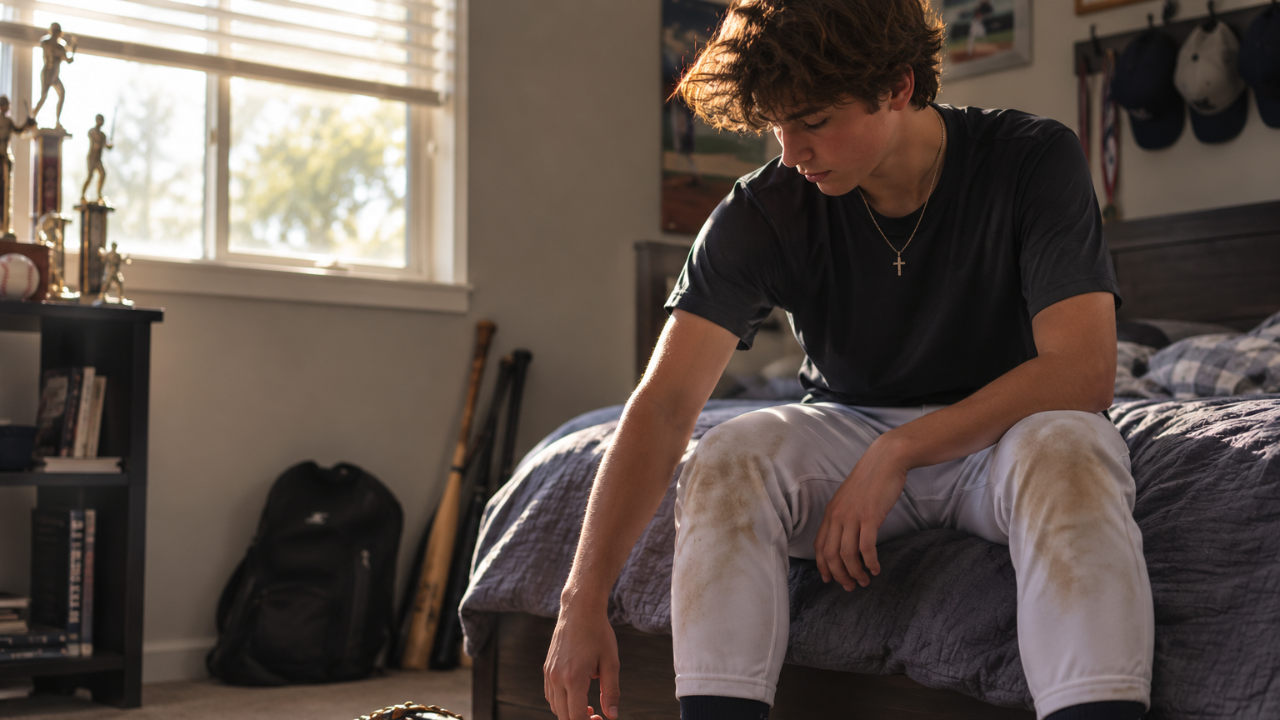
The morning after he pitches is when the arm tells you the most — if you know which questions to ask.
He woke up sore. You heard about it before breakfast — or saw it in how carefully he moved reaching for things, or in the stiff way he rolled his shoulder getting ready. The question isn't whether his arm should be sore after pitching. Some next-morning soreness is entirely normal. The question is what this particular soreness is actually telling you.
Next-morning arm soreness after pitching is not one thing. The character, timing, and location of it each carry different information. Here's how to read them.
Joey Myers has worked with youth pitchers and their families since 2008 through HittingPerformanceLab.com. VeloRESET is his decision-support framework for parents navigating arm health without more guessing.
What causes arm soreness the morning after pitching?
Next-morning arm soreness after pitching is caused by cumulative micro-tissue stress from throwing — the muscles, tendons, and surrounding structures absorbing the force of each pitch and signaling the recovery process overnight.
This is similar in mechanism to the muscle soreness athletes feel after any high-effort physical activity: a tissue-level response to stress, not a sign that something is broken. The arm is communicating that it worked hard yesterday. The morning after a game is when that response peaks, because the recovery process runs through the night.
This is actually why next-morning soreness is useful information. A pitcher who says "I feel fine" between innings may wake up the next morning giving you a clearer picture of what yesterday's outing actually cost. The arm is being honest in a way it often isn't in the moment.
How do you tell whether next-morning soreness is normal or a signal worth paying attention to?
Normal next-morning soreness is diffuse, located in the muscle belly of the upper arm or forearm, improves with light movement, and follows the same general pattern as previous outings. Signal soreness is localized to a specific point, joint-adjacent, or in a location it hasn't been before.
Four things to assess right now:
- Where exactly is it? Muscle belly — upper arm, forearm — is likely normal fatigue. A specific point inside the elbow or at the front of the shoulder is worth paying attention to.
- Does it improve with movement? Normal recovery soreness typically loosens after 10–15 minutes of light activity. Soreness that stays or worsens with movement is a different signal.
- Is this where it usually lives after a game? Predictable post-outing soreness in a familiar location is generally reassuring. A new location is not.
- Does the effort match the soreness level? If yesterday's outing was light but the arm is unusually sore this morning, something doesn't add up. That mismatch matters.
Most parents — and most pitchers — only notice soreness when it becomes pain. The soreness spectrum below pain level is where the most useful information lives. The full guide to youth pitcher arm soreness versus pain covers how to distinguish the two across a full week of throwing.
What does the 24-hour vs. 48-hour window mean for youth pitcher arm soreness?
Normal post-outing arm soreness should be improving by 24 hours and mostly resolved by 48 hours — soreness that is still present or worsening at 48 hours is a Yellow signal that warrants reducing throwing demand before the next session.
The 24-hour window is the body's standard clearing timeline for acute muscle fatigue. If his arm is meaningfully sore on Monday after a Sunday game, that's within normal range — especially after a high-demand outing. If it's still sore Tuesday, or worse Tuesday than Monday, the arm hasn't cleared. Adding another throwing session on top of an uncleared arm is how low-level fatigue compounds into something that eventually forces the shutdown you were trying to avoid.
The 72-hour mark is also meaningful: soreness that lingers past three days after a typical outing, or that is worsening rather than fading, is a Red signal worth taking seriously. Full rest and evaluation before the next throwing session. The post-bullpen fatigue guide covers the same timing framework for bullpen sessions specifically — the math is the same. ASMI research on youth pitcher arm load consistently identifies the failure to allow full recovery between high-demand sessions as a primary injury risk factor — the 24–48 hour window is where that risk is most controllable.
What does it mean when the soreness is in a different spot than usual?
Soreness that migrates to a new location — especially to a joint-adjacent area or somewhere it hasn't been before — is one of the most overlooked early signals parents can track, and it's almost always worth a day of reduced demand regardless of how severe it feels.
Every pitcher develops a predictable soreness pattern over a season. The post-outing soreness for a specific kid tends to live in the same place at roughly the same level. When it migrates — when elbow soreness becomes forearm soreness, or familiar upper arm fatigue becomes a specific shoulder point — it often reflects the body compensating for a stress it isn't clearing the way it normally does.
Location change is one of the six arm signals parents most consistently misread: it gets treated as "just a different sore spot" rather than as a pattern shift. When the soreness pattern shifts, the throwing plan should shift with it. The full breakdown of what each signal pattern means is in the guide to arm signals youth pitcher parents misread.
Why doesn't his pitch count tell you whether the arm will be sore the next morning?
Pitch counts measure volume in a single outing — they don't account for the intensity, the prior throwing that week, or the cumulative load the arm carried into that game.
Two pitchers can throw 65 pitches in the same Saturday afternoon game and arrive at Sunday morning in completely different places. One had two rest days before the game, no bullpen session that week, and slept nine hours. The other had a lesson on Wednesday, a bullpen on Thursday, and pitched in a second game the same day. The pitch count was identical. The arm's situation the next morning was not.
This is the core gap pitch count tracking misses: it's a single-session number applied to an arm running on cumulative multi-day load. Next-morning soreness often tells you more about the arm's true state going into yesterday's game than the pitch count from the game itself. The weekly arm assessment guide walks through how to track that cumulative picture across a full week of throwing.
Why is "rate your pain 1 to 10" the wrong question to ask after a tough outing?
The 1–10 pain scale is the wrong tool after a tough outing because young pitchers systematically calibrate it down over a long season — what genuinely felt like a 6 in April gets reported as a 3 by August, because the arm has been chronically tired long enough that the new level feels normal.
The more useful questions aren't about severity. They're about pattern:
- "Does it feel the way it usually does after a game?" — yes versus no tells you more than any number
- "Is it in the same place it was after the last outing?"
- "Does it loosen up if you move around, or does it stay the same?"
A pitcher who answers "yeah, my arm always feels like this by August" is telling you something important — and not what he thinks he's telling you. The fact that it "always feels like this" by mid-summer means the arm has been running a recovery deficit for months. That's the pattern worth paying attention to. This calibration-down tendency is what the six arm signals post calls the "I'm Fine" Mask — the verbal report becomes the least reliable data point by late season.
Not sure if this morning's soreness is normal or a signal?
The free 2-Minute Arm State Check gives you a Green, Yellow, or Red read on where his arm stands right now — and a clear recommendation for today's throwing plan.
Take the Free Arm State Check →What should you actually do the morning after pitching when his arm is sore?
Take two minutes to assess the soreness using the four-point framework above — then adjust today's throwing plan based on what you find, not what the schedule says.
Here's the practical decision framework:
🟢 Green — Normal pattern
Soreness is in the usual location, matches what's expected for this type of outing, improves with movement, and is on track to clear within 24 hours. Proceed with a light maintenance day — easy catch, relaxed long toss, nothing at high intensity. Let the arm work through its normal clearing process.
🟡 Yellow — Modified day
Soreness is in a new location, more than usual for this type of outing, still present past 48 hours, or there's a location shift alongside the normal pattern. No bullpen. Reduce or skip throwing for the day. Reassess in 24 hours before adding anything back. This week's schedule needs to move around the arm.
🔴 Red — Full rest + evaluate
Soreness is joint-adjacent — specific point inside the elbow, front of the shoulder — worsening rather than fading after 48 hours, or significant enough to affect how he's moving in daily life. Full rest. Seek evaluation before the next throwing session. This is not an overreaction — it's the arm giving you a clear message in time to act on it before it compounds.
The morning after he pitches is the window. Most parents let it pass by asking "how do you feel?" and moving to whatever's on the schedule. The arm is trying to give you more information than that.
Frequently asked questions about arm soreness after pitching
Is it normal for a youth pitcher's arm to be sore the morning after a game?
Yes — some next-morning arm soreness is a completely normal part of the recovery process after pitching. The arm absorbs significant cumulative stress during a game, and the tissue-level recovery response typically peaks overnight. Normal soreness is diffuse, located in the muscle belly of the upper arm or forearm, and improves with light movement within the first 24 hours. Soreness that is pinpoint-specific, joint-adjacent, or in a new location warrants a different response.
How long should post-pitching arm soreness last in a youth pitcher?
Post-pitching arm soreness should be meaningfully improving by 24 hours and largely resolved by 48 hours after a typical outing. Soreness that is still present and unchanged at 48 hours is a Yellow signal — reduce throwing demand before the next session and reassess. Soreness that is worsening at 48 hours, or that persists past 72 hours, warrants full rest and evaluation before returning to throwing.
What does it mean when a youth pitcher's arm soreness moves to a different spot the morning after pitching?
Location change in next-morning soreness — particularly when it moves to a joint-adjacent area or a spot it hasn't been before — is one of the most important early signals parents can track. Migrating soreness often reflects compensation: the arm is handling the accumulated load differently than it normally does. When soreness changes location, treat it as a Yellow signal regardless of severity and reduce throwing demand for at least one day before reassessing.
Should a youth pitcher throw the day after a game if his arm is sore?
It depends on the soreness pattern. Normal post-game soreness — diffuse, familiar location, improving — is generally compatible with a light maintenance day of easy throwing. Soreness in a new location, worse than expected, or not improving with movement warrants a full rest day before returning to any throwing. When in doubt, a rest day costs far less than the compounding effect of throwing through uncleared fatigue. The guide to recovery between games covers how to manage the full week's throwing schedule around the arm's actual state.
What is the difference between arm soreness after pitching and a pitching injury?
Arm soreness after pitching is diffuse, located in the muscle belly, improves with rest and light movement, and follows a predictable recovery timeline. A more serious situation tends to be localized to a specific point, joint-adjacent (inside the elbow or front of the shoulder), present during the throwing motion itself (not only after), and not resolving with a normal rest window. Sharp pain during a pitch or pain that worsens over consecutive days warrants evaluation from a sports medicine provider regardless of what the pitch count showed.
Can pitch count limits prevent next-morning arm soreness in youth pitchers?
Not reliably. Pitch counts track volume in a single session — they don't account for the cumulative throwing load across the week, intensity, recovery gaps, or how much the arm carried into that game from prior sessions. Two pitchers can throw the same pitch count in the same game and arrive the next morning in completely different physical states. Next-morning soreness is a more direct measurement of the arm's true state than any pitch count from the previous day.
When should next-morning arm soreness after pitching be evaluated by a doctor?
Seek evaluation when: the soreness is localized to a specific joint-adjacent point (inside the elbow, front of the shoulder), it is worsening rather than fading after 48 hours of rest, it is significantly affecting normal arm movement in daily life, or there is any numbness, tingling, or locking sensation accompanying it. These patterns fall outside the range of normal recovery response and warrant professional evaluation before resuming throwing.
Want a full picture of where his arm stands right now?
The Arm State Read goes beyond this morning — it gives you a complete analysis of his current signals, this week's schedule, and exactly what the next 7 days of throwing should look like for this arm specifically.
Get the Arm State Read — $27 →30-day Calm Parent Guarantee