The 6 Arm Signals Every Baseball Parent Misreads
The 6 Arm Signals Every Baseball Parent Misreads
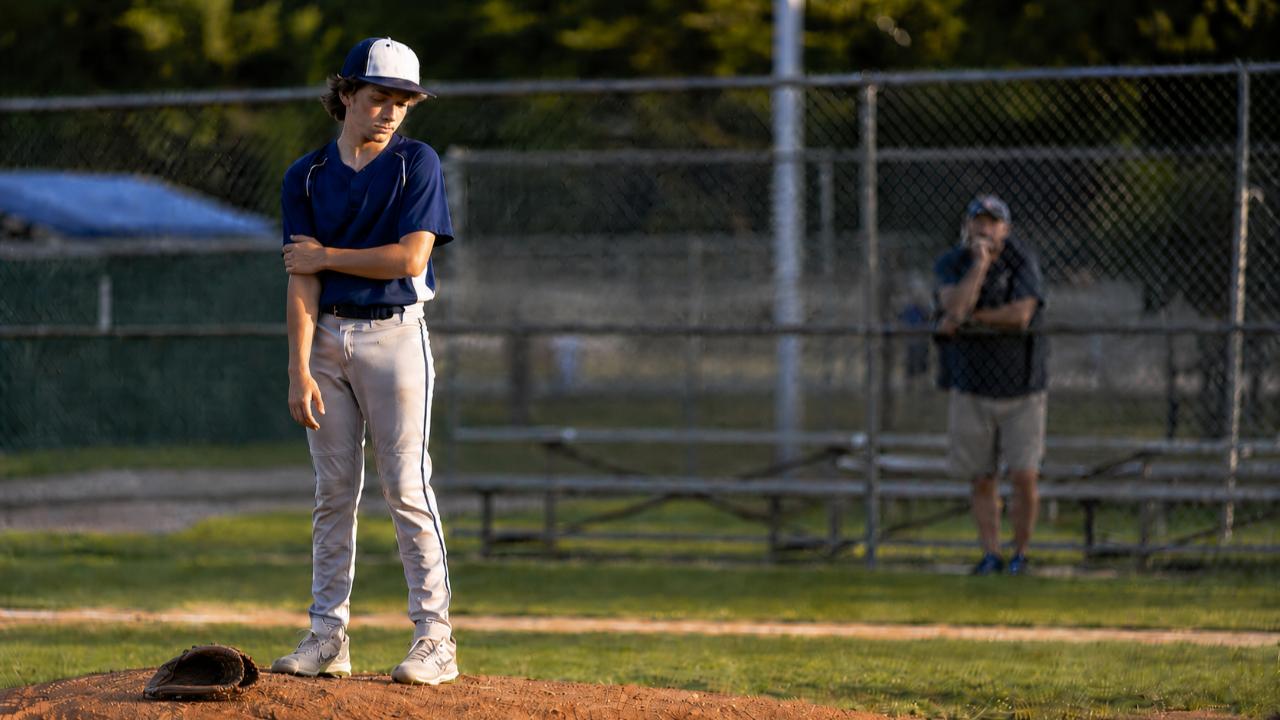
Most parents of youth pitchers know to watch for arm pain. What they miss is everything that comes before it — the six patterns the arm uses to communicate that something needs attention before it becomes a problem.
These aren't obscure medical signs. They're visible, behavioral, and observable from the parent side of the fence. The challenge is knowing what they mean — and what they're asking you to do.
Why Youth Pitchers Don't Tell You When Something's Wrong
Young pitchers don't hide arm issues because they're being dishonest. They hide them because they've learned — from coaches, from culture, from watching how adults respond — that saying "my arm hurts" has consequences. They sit. They miss starts. They get worried looks and cautious conversations.
So the arm communicates differently. Not through words — through patterns. A parent who knows the six patterns doesn't need to rely on their pitcher's self-report. They can read what the arm is actually telling them.
Signal 1: The Elbow Rub
Between pitches or after an inning, the pitcher reaches across and rubs the inside of the throwing elbow — often without thinking about it. It's a self-soothing gesture that's become automatic. He may not even realize he's doing it.
What it means: medial elbow stress is accumulating. Not necessarily an injury — but the arm is sending a Yellow signal. The inside elbow is one of the most common sites of growth-related stress in pitchers ages 10–15. When this gesture becomes a habit, it's worth paying attention to before it gets louder. For a broader look at what these early patterns indicate, see the full guide to youth pitcher arm fatigue signs. In older pitchers where the growth plate has closed, the Elbow Rub is also one of the earliest observable Tommy John warning signs parents can read from the sideline.
Signal 2: The Shoulder Shrug
After releasing a pitch, the pitcher gives a small shrug or roll of the throwing shoulder — a reset gesture that looks almost like a tic. It may happen after harder throws, after back-to-back outings, or consistently late in appearances.
What it means: posterior shoulder fatigue is building. The muscles responsible for decelerating the arm after ball release are working harder than usual and asking to be reset. This is often a recovery signal — the arm needs more time between sessions than the current schedule allows. When the Shoulder Shrug appears consistently across multiple outings rather than just after heavy games, it's worth ruling out growth-plate stress at the proximal humerus — what parents know as Little League shoulder. For pitchers who are naturally very flexible, a consistent Shoulder Shrug pattern may also reflect the instability-fatigue mechanism that comes with hypermobility — where the active stabilizers are doing more work per pitch than average and showing it earlier in outings. The guide to hypermobility in youth pitchers explains what that specific pattern looks like and how to manage it.
Signal 3: The Stiff Turn
The pitcher turns to look at a runner on base, or turns his head during warmups, and the movement is noticeably restricted — a full-body turn instead of just a neck turn, or a visible stiffness in the upper back and shoulder region.
What it means: the posterior shoulder and upper back are carrying residual tension that hasn't resolved between outings. This is a recovery pattern signal, not necessarily an acute injury signal — but it indicates the arm isn't arriving at the next session fresh. Worth tracking as a Yellow signal.
Signal 4: The Sudden Velocity Dip
His velocity drops — not gradually over a season, but noticeably from one outing to the next, or even within a single appearance. The stuff that was there on Saturday isn't there on Tuesday. He's working harder to produce less.
What it means: the arm is fatigued beyond what normal between-outing recovery is resolving. Velocity is one of the clearest external indicators of arm fatigue because the body can't fake it — when the arm is running a deficit, the output drops. A sudden, unexplained velocity dip in a youth pitcher is a Yellow-to-Red signal depending on how long it persists. When the velocity dip comes with the arm feeling heavy, flat, or without its usual snap — rather than specifically painful — that's the pattern parents know as dead arm. The guide to what dead arm actually means in youth pitchers covers how to tell normal recovery fatigue from a pattern worth evaluating, and what to do this week.
Signal 5: The "I'm Fine" Mask
You ask how the arm feels. He says fine — quickly, flatly, without elaboration, and moves on. Or he says fine with just enough hesitation that it doesn't land as convincing. The words are correct. Something in the delivery isn't.
What it means: the arm is telling you something he isn't. The "I'm Fine" Mask is one of the most important signals to learn to read because it requires no specialized knowledge — it just requires paying attention to the texture of the answer rather than only the words. When the confidence doesn't match the claim, treat it as a Yellow signal and reduce demand for the week.
Signal 6: The Confidence Spiral
This one doesn't look like an arm signal at all. The pitcher starts missing spots he usually hits. His tempo slows down. He's visibly in his head between pitches. Command disappears — not because mechanics broke down, but because something has shifted in how confident he feels throwing hard.
What it means: the arm is bothering him in a way that's affecting his willingness to commit to pitches. The Confidence Spiral is the arm's indirect communication — when a pitcher subconsciously starts protecting the arm by throwing with less conviction, command suffers. If this pattern appears without an obvious mechanical explanation, the arm is worth checking.
How to Use These Signals Week to Week
None of these signals alone means shutdown. Most mean: pay attention this week, reduce demand, and watch whether the pattern normalizes. The value of naming them is that you stop waiting for obvious pain before taking the arm seriously.
Green means none of these patterns are present or escalating. Yellow means one or more are showing up and worth monitoring. Red means multiple signals are converging, or a single signal is getting louder — and the arm needs space before adding more demand.
The goal isn't to diagnose. It's to read. And reading what the arm is already telling you is how you stay ahead of the harder conversation. This is especially true for players carrying two positions — pitcher-catchers running both a pitching and catching schedule can show multiple signals simultaneously, with each role's stress pattern masking the other. Growth spurts introduce a similar layer — during rapid bone lengthening, the Shoulder Shrug and Stiff Turn patterns may appear as the arm recalibrates to new proportions rather than as signs of acute stress. The guide on arm pain during a youth pitcher growth spurt covers how to read these signals in that specific context. For a structured way to track these signals week over week, see why a weekly arm check habit changes everything for baseball parents.
Frequently Asked Questions
What are the early signs of arm fatigue in a youth pitcher?
The earliest signs of arm fatigue in youth pitchers are behavioral, not verbal. Watch for self-soothing gestures like elbow rubbing or shoulder rolling, stiffness when turning the head or upper body, velocity that drops within or across outings, and a "fine" response that doesn't quite land convincingly. Pain is often the last signal — these six patterns show up first.
How do I know if my youth pitcher's arm soreness is serious?
Arm soreness that is localized to a specific point, sharp rather than diffuse, present during the throwing motion (not only after), or not resolving within 48–72 hours of genuine rest warrants a professional evaluation. Soreness that is diffuse, follows a normal recovery timeline, and has no other warning signals is generally a Yellow signal — worth monitoring, not an emergency.
Why does my pitcher say he's fine but still throws worse than usual?
Velocity and command are the arm's honest output — they cannot be faked when fatigue is present. A pitcher who says he feels fine but is producing noticeably less than his normal baseline is often experiencing arm fatigue he has adapted to or is unconsciously downplaying. When the performance signal and the verbal report conflict, trust the performance signal.
Should I ask my youth pitcher about his arm after every game?
Yes — but pay more attention to how he answers than what he says. A brief, confident "feels good" is useful information. A quick "I'm fine" that closes the conversation is also information. Ask consistently so the question doesn't feel alarming when something is actually off, and track patterns over time rather than reacting to single outings.
Seeing one of these signals right now?
The free 2-Minute Arm State Check gives you a Green, Yellow, or Red read on your pitcher's arm — and a clear recommendation for this week.
Take the Free Arm State CheckTakes about 2 minutes. No purchase required.