The Week Before A Tournament Isn't The Time To Add Anything — It's The Time To Protect What's Already There
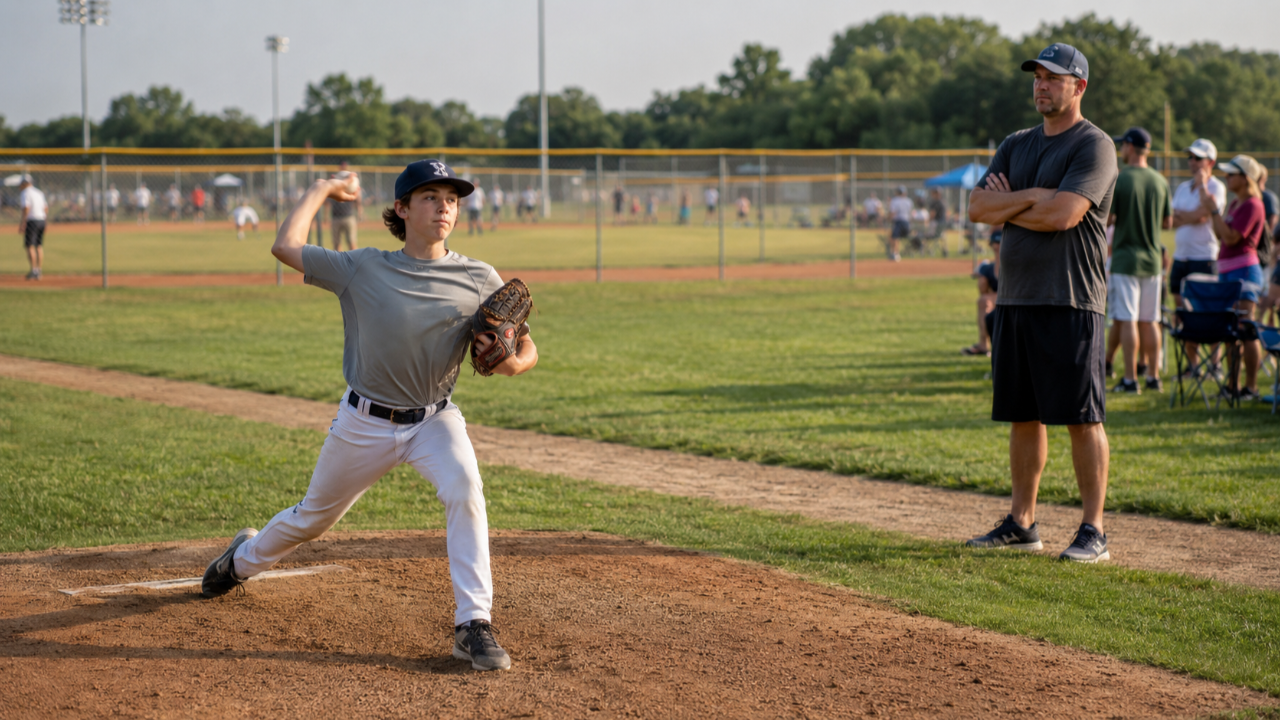
The tournament is this weekend. You're thinking about what to do this week to make sure he's ready.
That instinct is right. The week before a tournament matters. But what it calls for probably isn't what you're picturing.
Most parents default to the assumption that preparation means adding something — an extra bullpen, more long toss, a shoulder routine they found online. The research on how pitching arms respond to demand suggests the opposite: the week before a high-demand tournament weekend is when you protect recovery, not when you add load. An arm that arrives at Saturday's first pitch rested and sharp is in a different state than one that threw a full bullpen Wednesday and had practice Friday.
This post is about what to actually do this week — not a routine to add, but a decision framework for the days between now and the first pitch.
I'm Joey Myers. I built VeloRESET because tournament weekends are where most of the arm health decisions parents regret happen — and almost all of them are made without a clear framework for what to protect and what to let go.
"He pitched four innings Friday, two on Saturday, and then they put him back in Sunday because they needed him. By Monday his arm wasn't right. I didn't know I could have said no."
— Parent of a 13-year-old travel ball pitcher
What does "arm care before a tournament" actually mean for a youth pitcher?
Pre-tournament arm care for youth pitchers means managing throwing load in the days before the tournament to ensure the arm arrives ready — not adding exercises or routines that deplete what's already built.
The phrase "arm care" often gets interpreted as a program — bands, stretching, shoulder exercises. Those things have a place in a season-long maintenance routine. But in the week before a tournament, the highest-value arm care decision is load management: how much does the arm throw, at what intensity, on which days, and how much recovery sits between now and Saturday's first pitch.
An arm that arrives at a tournament weekend fully recovered from the week's throwing load is in the best possible state for what it's about to face. An arm that arrives having thrown a full bullpen Wednesday, long toss Thursday, and team drills Friday is already carrying a deficit before the first pitch. Pitch counts don't capture this — the per-game limit only tracks what happens in games, not the cumulative load the arm experienced in the days leading up to them.
Why is the week before a tournament the wrong time to add a new bullpen?
Adding throwing volume in the days immediately before a tournament shrinks the recovery window and sends the arm into high demand still carrying load it hasn't cleared.
This is the most common mistake in tournament prep weeks: coaches run an extra bullpen to "sharpen" the arm, pitchers do extended long toss to "stay loose," parents add session work because the tournament feels important and preparation feels like it should involve more, not less.
The arm doesn't sharpen in a 4-day window. What can happen in 4 days is meaningful recovery — or the loss of it. A pitcher who throws a full bullpen Tuesday before a Saturday tournament has roughly 3.5 days for that session to clear before the first pitch. That's a tight window under normal weekly load. Add Thursday practice and the arm arrives Saturday having recovered from two sessions in 4 days while being asked to pitch competitively across two or three games.
The pre-tournament week is not a preparation window. Preparation happens across the season. The week before the tournament is the time to arrive in the best possible condition with what has already been built — not to build more of it in the final days.
What should a youth pitcher's throwing schedule look like in the days before a tournament?
In the 5 days before a tournament, throwing volume and intensity should reduce progressively, with at least one complete rest day in the 48 hours before the first game.
A practical pre-tournament throwing framework:
Monday–Tuesday (5–4 days out): Normal or slightly reduced throwing at regular session intensity. This window is far enough from the tournament that recovery is still possible before the weekend. If a bullpen is scheduled, Monday or early Tuesday is the last reasonable slot.
Wednesday (3 days out): Reduced volume only — light flat-ground, shorter distance, lower intent. No bullpen, no high-percentage long toss. This day bridges the training week and the taper. The arm is still moving; it's just moving with less demand.
Thursday (2 days out): One brief sharpening session — 10–15 pitches at moderate effort to maintain feel, not to add load. Some pitchers prefer a light catch session at comfortable distance. The goal is arm-feel maintenance, not throwing output.
Friday (1 day out): Rest day, or minimal activity only. Light catch at short distance if the pitcher needs movement. The arm should arrive Saturday feeling rested and loose, not freshly worked.
The arm that reaches Saturday's pre-game warmup after a genuine Thursday/Friday taper is in a different state than the arm that threw full session work on Thursday. That difference tends to show up in the 4th inning of the second game — when one pitcher still has something and the other is working on empty.
Trying to figure out where his arm actually stands heading into this weekend?
The free 2-Minute Arm State Check gives you a Green, Yellow, or Red read on what you're observing right now — and a clear recommendation for what the days before this weekend should look like.
Take the Free Arm State Check →Takes 2 minutes. Free. No purchase required.
How do you know if the arm is arriving at tournament weekend ready or already in deficit?
The clearest signal is Saturday morning warmup quality — specifically, how long it takes the arm to find its normal feel and whether velocity in the first inning reflects a rested baseline or a depleted one.
Signs the arm arrived ready:
- Warmup reaches normal command and snap within 15–20 pitches at typical effort
- Velocity in the first inning is close to the pitcher's typical baseline — not labored
- Pitcher reports arm feeling normal or loose, not unusually stiff or heavy
- Between-inning feel is stable through the middle innings without notable drop
Signs the arm arrived already in deficit:
- Warmup takes noticeably longer than usual to find command or arm snap — the arm is searching for feel it didn't bring in
- Velocity is down from the first inning despite full effort, not from pitch 60
- Pitcher is rubbing or shaking the elbow or shoulder during warmups — before the game has even started (see the six arm signals parents misread for what this pattern means)
- The arm feels heavy or flat in a way that doesn't respond to warmup volume — more pitches don't seem to help
Catching the deficit signals Saturday morning — before the game starts — is more valuable than noticing them during it. What you do with that information is different at 9:00 AM than in the third inning.
Seeing deficit signals before the tournament even starts? The 2-Minute Arm State Check gives you a structured read and a clear recommendation for the weekend ahead.
What does arm care actually look like between games during a tournament?
Between tournament games, arm care means protecting recovery time — genuine rest between appearances, a light warm-down after pitching, and attention to the physical basics (nutrition, hydration, sleep) that most parents underestimate.
After a pitching appearance: Light activity to bring the arm down — not aggressive stretching, not additional throwing, just enough movement to let the arm transition out of its elevated state before sitting completely. Then rest. The arm doesn't need more work; it needs space.
The 90-minute window: A pitcher who appeared in game 1 and is being considered for game 2 later the same day needs at minimum 90 minutes of genuine rest between competitive throwing efforts. That's the absolute floor for most youth pitchers — and for pitchers who threw significant volume in game 1, the window should be longer. This is the conversation to have with coaching staff before game 2 starts, not during it.
Nutrition and hydration: A well-fueled, well-hydrated arm handles the second game differently than a depleted one that had a bag of chips and a sports drink between appearances. Carbohydrates, protein, and consistent hydration between games are part of how the arm performs in the later innings of day 2 — not glamorous, but real.
Friday night sleep: Tournament schedule anxiety, shared hotel rooms, late-night team activities — all of these reduce sleep quality in the night before the first game. Protecting Friday night sleep is one of the highest-value pre-tournament decisions families can make and one of the most consistently overlooked. Physical recovery happens during sleep, not during warmups.
Why does the arm often feel better Saturday than Sunday — and what to do about it?
Saturday feels better than Sunday because the arm arrives at Saturday's first pitch rested, while Sunday begins after a full day of high-demand throwing with only overnight recovery between appearances.
The Saturday-to-Sunday performance drop is one of the most predictable patterns in youth tournament baseball. It's not a mechanical breakdown — it's recovery math. Saturday's pitching appearance depletes what the arm brought in. Saturday night partially restores it. Sunday happens before full restoration is complete.
What to do about it: if Sunday is happening, manage Saturday with Sunday in mind. A pitcher whose Saturday load is calibrated knowing Sunday is coming arrives Sunday with more available than one who pitched his maximum Saturday and is asked to go again. This is a coaching and parent conversation that needs to happen Saturday morning — before the tournament schedule forces the decision in a more urgent context.
The summer overload patterns that accumulate across a travel ball season tend to first become visible in this Saturday-to-Sunday decline — the arm that recovered normally early in the summer is now noticeably worse on day 2 than it used to be. That's a signal about cumulative load, not just this weekend's schedule.
How should a youth pitcher's arm recover after a tournament weekend?
Post-tournament recovery requires at least one complete rest day before any return to throwing, with 48–72 hours before any high-intensity session.
The post-tournament window is one of the most consistently under-managed recovery periods in youth baseball. Parents arrive home Sunday evening and Monday it's back to normal — practice, lessons, bullpens. The arm pitched in multiple high-intensity games across two or three days with compressed recovery between them. It needs space proportional to what was asked of it.
Monday: Complete rest from throwing. No exceptions. Not a light catch session, not a "just to keep the arm loose" toss. The arm worked hard. It needs to not work.
Tuesday: Light assessment — short flat-ground at reduced effort. Check morning-after soreness timing. A well-recovered arm should feel noticeably better Tuesday morning than Sunday night. If it doesn't — still heavy, still flat, still stiff — the rest window extends.
Wednesday and beyond: Return to normal throwing load only when the arm has genuinely returned to baseline. Post-tournament soreness that resolves within 48 hours of genuine rest is expected. Soreness that is still present at 72 hours, or that includes a localized painful point, warrants pulling back further before the next full throwing session.
Research from the American Sports Medicine Institute consistently identifies inadequate rest between high-demand outings — not any single outing — as among the primary contributors to youth pitcher arm injury accumulation. The post-tournament recovery window is one of the highest-risk periods in that pattern, and treating it as discretionary increases cumulative load. Post-tournament dead arm — the flat, heavy feeling after multiple high-demand games — is common and usually normal. The guide to what dead arm actually means in youth pitchers covers how to tell normal tournament fatigue from a pattern that needs more than a rest day.
What decisions should parents be making during tournament weekend in real time?
During a tournament, parents' most important real-time decisions are tracking cumulative pitch count across the full weekend, monitoring how the arm feels at the start of each game day, and being willing to communicate what they're observing to coaching staff before it becomes urgent.
Track cumulative count across the weekend. Per-game limits are the standard, but the total pitches thrown Friday evening through Sunday is the number that matters for the arm's risk picture. Know the weekend total before agreeing to any Sunday appearance — not the per-game count, the running total.
Sunday morning arm check before agreeing to pitch. The warmup quality Sunday morning tells you more about what the arm has available than Saturday's pitch count does. If Sunday's warmup shows deficit signals — taking significantly longer than usual, arm feeling heavy despite effort — that is information worth communicating to coaching staff before the lineup is set.
Advocate before it's urgent, not during it. The parent who communicates a concern at 9:00 AM Sunday has options. The parent who raises it in the third inning when the arm is already visibly struggling has fewer. Advocating for the arm isn't overreach — it's the job. Coaches manage innings. Parents manage the arm across the season.
Know when the answer is no. Localized pain during throwing, velocity dropping to concerning levels mid-appearance, or a pitcher who is guarding his mechanics without being coached to — these are Red signals. Tournament stakes don't change the arm's signals. The tournament is one weekend. The arm has more seasons ahead of it.
Frequently Asked Questions
What arm care routine should a youth pitcher do the week before a tournament?
The most effective pre-tournament arm care isn't a routine — it's a load reduction. In the 5 days before a tournament, the highest-value decisions are reducing throwing volume and intensity progressively, building in at least one genuine rest day in the 48 hours before the first pitch, and protecting Friday night sleep. Any specific maintenance exercises (band work, shoulder care) should already be part of the regular season routine — adding new work in the week before a tournament is the opposite of what the arm needs.
How many days of rest should a youth pitcher have before a tournament?
At least 1–2 days of meaningfully reduced or no throwing in the 48 hours before the first game. The 72-hour window before Saturday morning is the most critical recovery period — what the arm does Wednesday through Friday determines what arm shows up Saturday. The common mistake is treating Monday–Wednesday as a normal training week and expecting the arm to be sharp Saturday. A progressive taper starting Wednesday, with genuine rest Thursday or Friday, gives the arm a real preparation window rather than compressing recovery into a pre-game warmup.
Can a youth pitcher throw a bullpen the week before a tournament?
Yes — in the early part of the week, typically Monday or Tuesday, 4–5 days before the first game. That window allows meaningful recovery before the tournament demand begins. A bullpen on Wednesday or Thursday — 2–3 days before the first pitch — is the timing that creates problems. The arm needs adequate recovery time after a bullpen, and a 2-day window before a high-demand tournament weekend is too short for most youth pitchers to fully clear that session.
How should a youth pitcher warm up on tournament game days?
Start the pre-game warmup earlier rather than adding more pitches. A pitcher who needs 15–20 warmup pitches to reach game feel should start those 20–25 minutes before first pitch, not 10. If the arm is taking noticeably longer than usual to find its feel in warmup — more pitches than normal, arm still feels heavy — that's a signal worth communicating to coaching staff before the first inning, not information to keep to yourself while hoping it works out by the second batter.
What should a youth pitcher do between games in a same-day doubleheader?
Rest — genuine rest, not light throws or early warmup preparation for game 2. The arm needs whatever recovery window is available between appearances, and adding throwing activity during that window shortens it. Nutrition and hydration between games matter significantly — a well-fueled arm handles the second game differently than a depleted one. The 90-minute minimum between maximum-effort throwing activities is the floor; more is better when the schedule allows.
What are the warning signs a youth pitcher shouldn't pitch the second day of a tournament?
The clearest signals: warmup takes noticeably longer Sunday morning than it did Saturday, velocity in Sunday warmup is significantly below Saturday's baseline, the pitcher is already rubbing or shaking the arm before the game begins, or Sunday morning soreness hasn't meaningfully cleared from Saturday's outing. Any one of these, especially in combination, suggests the arm hasn't recovered adequately from Saturday's demand. Communicating this to coaching staff Sunday morning — before the appearance decision is made — is the most effective intervention point.
How long should a youth pitcher rest after a tournament weekend?
At least one complete rest day Monday — no throwing of any kind. Most youth pitchers who pitched in a tournament need 48–72 hours before returning to normal throwing volume. Post-tournament soreness that clears within 48 hours of genuine rest is expected fatigue. Soreness still present at 72 hours, or that includes localized pain at a specific point, warrants pulling back further and monitoring before the next full session. If the post-tournament arm is still noticeably flat or heavy after two rest days, that pattern — not the tournament itself — is worth evaluating.
Tournament is this weekend — get a personalized read on where his arm actually stands heading in.
The Arm State Read walks through your pitcher's specific situation right now — what his current signals mean, whether the arm is ready for what this weekend will ask of it, and exactly what the next few days should look like.
Get the Arm State Read →$27 · Personalized to his arm right now
VeloRESET provides educational information for parents of youth baseball pitchers. This content is not a substitute for evaluation, diagnosis, or treatment by a qualified medical professional. If your pitcher experiences localized arm pain during throwing, consult a sports medicine physician before continuing activity.