His Arm Feels Fine Until It Doesn't — And For The Naturally Flexible Pitcher, That Pattern Usually Has A Specific Reason
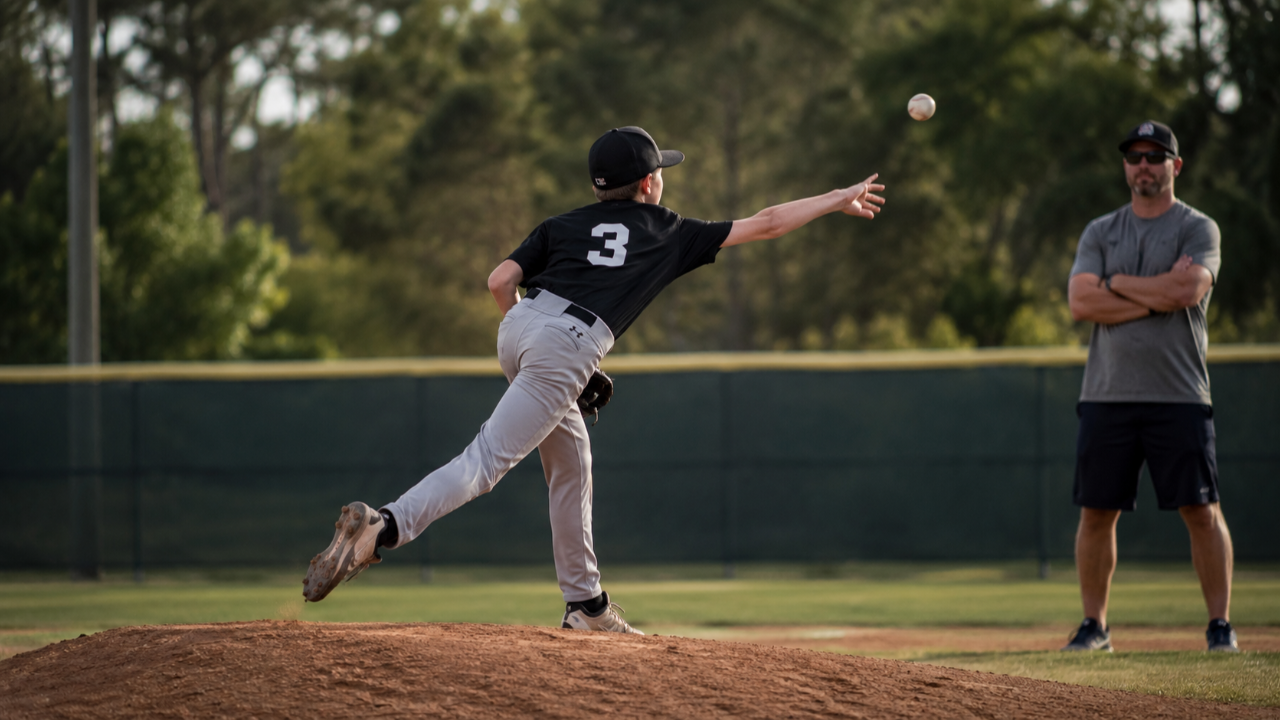
He's always been the flexible one. Could touch his palms flat to the floor in third grade. Coaches love it — "great range of motion, throws so loose." And for a long time, the arm backed that up.
Then something started shifting. Not a single injury, not a specific moment. The arm just started feeling different — off on days when nothing changed, fine on days when the workload looked heavy. Recovery that used to take a day was taking two or three. And when you asked where it hurt, the answer kept moving.
If that pattern sounds familiar, the flexibility probably isn't just a coincidence.
Hypermobility — joints that move beyond their normal range because the connective tissue holding them together is more lax than average — is relatively common in young athletes, and it's frequently described as an asset in pitchers. In many ways, it is. But it also changes how the arm handles cumulative stress, and it creates a specific pattern that standard pitch count logic doesn't catch and that most parents don't have a name for until they're already deep in it.
I'm Joey Myers. I built VeloRESET because the flexible pitcher's arm pattern is one of the least-explained in youth baseball — and parents of these kids are left making decisions without a framework that actually fits their situation.
"He's been flexible his whole life — coaches always said it was a gift. This summer his arm started feeling off in a way I couldn't explain. Some days great, some days it just wasn't there. One week the shoulder, the next week the elbow. Nobody connected it to the flexibility until we saw a specialist."
— Parent of a 15-year-old travel ball pitcher
What is hypermobility in youth pitchers — and how common is it?
Hypermobility in youth pitchers means the joints — particularly the shoulder and elbow — move through a range of motion beyond what's typical, due to connective tissue (ligaments and joint capsule) that is more lax or elastic than average.
Hypermobility exists on a spectrum. At one end, it's a clinical condition — Hypermobile Ehlers-Danlos Syndrome or Hypermobility Spectrum Disorder — that affects connective tissue throughout the body. In the middle of the spectrum, which is far more common and far less discussed, is generalized joint hypermobility (GJH): kids who are simply more flexible than average across multiple joints without meeting clinical disorder criteria. Estimates suggest somewhere between 10–25% of children have some degree of generalized joint hypermobility, with higher rates in younger kids and girls — though it's present in boys in meaningful numbers too.
In a pitching population specifically, shoulder hypermobility is both more common and more consequential than in the general population. Research published in the American Journal of Sports Medicine has found elevated rates of generalized joint hypermobility in overhead athletes compared to non-overhead athletic populations — not surprising, given that pitching selects for the range of motion that hypermobility provides.
The important distinction: hypermobility is not an injury. It's a physical characteristic. The arm health questions it creates aren't about whether the pitcher should stop — they're about how the arm's stress pattern differs from what standard workload logic assumes.
Why do flexible pitchers often seem fine — until they're suddenly not?
Hypermobile pitchers seem fine until they're not because their arm relies more heavily on active muscle stability — the rotator cuff and surrounding muscles — to compensate for joints that don't get as much passive support from the ligaments and capsule.
Here's the mechanism in parent-accessible terms. A typical shoulder has two stability systems working together: passive stability (the ligaments, joint capsule, and labrum holding the joint in place structurally) and active stability (the rotator cuff and periscapular muscles contracting to dynamically control joint position during movement). In a hypermobile shoulder, the passive system provides less resistance — the tissues are more elastic, so the shoulder moves through a larger range before the passive structures start pulling back on it.
That means the active stabilizers are doing more work to keep the joint controlled during every pitch. When those muscles are fresh — early in a season, early in a game, early in a week — they compensate effectively. The arm feels great. Velocity is there. Command is there. Parents and coaches see a healthy, talented arm.
As the active stabilizers fatigue — across a long outing, across a back-to-back tournament weekend, across a summer of high demand — the compensation starts to break down. The passive structures that are supposed to pick up the slack don't have much slack to offer. And the arm that felt completely fine on Thursday starts to feel genuinely off by Sunday, not because an injury happened but because the stability system is running depleted.
That's the "fine until suddenly not" pattern. It's not random. It's fatigue happening faster than expected, in a system that was already working harder than the pitch count suggested.
How does hypermobility affect a youth pitcher's arm health over a season?
Hypermobility affects a youth pitcher's arm health by accelerating the accumulation of stability-related fatigue, creating a pattern where the arm depletes faster within outings and recovers more slowly across a season than a comparable pitch count would predict.
Three patterns tend to emerge across a full season for hypermobile pitchers:
The within-outing drop. A hypermobile pitcher may look sharp through the first 30–40 pitches and then show a visible drop in command or velocity that doesn't match the workload. The fatigue is happening in the stability muscles, not the prime movers — so the arm still has power, but it's losing precision. Parents and coaches often interpret this as a mechanics problem. It's usually a fatigue-in-the-stability-system problem.
The weekend accumulation. Back-to-back tournament days hit the hypermobile arm differently. Day 1 looks normal. Day 2 — with the active stabilizers already carrying a recovery deficit — shows the instability pattern more clearly. The arm that was sharp Saturday is noticeably off Sunday, not because Saturday's pitch count was excessive but because the depletion happened faster and the overnight recovery window wasn't enough to fully restore what the stability system spent.
The mid-season baseline shift. By July or August of a high-demand travel ball season, the hypermobile pitcher's baseline starts drifting downward. Recovery windows that used to take 24–48 hours are now taking longer. The "arm feels off" days — which used to be occasional — are becoming more frequent. This is the cumulative version of the same mechanism: the active stabilizers are accumulating a load debt that doesn't fully clear between sessions.
This mid-season shift is where summer arm overload compounds the hypermobility pattern significantly. The combination of a high-demand schedule and a stability system that depletes faster than average is what creates the elevated risk.
Seeing the "fine until he's not" pattern and not sure what it means for this week?
The free 2-Minute Arm State Check gives you a Green, Yellow, or Red read on what you're observing right now — and a clear recommendation for what the next few days of throwing should look like.
Take the Free Arm State Check →Takes 2 minutes. Free. No purchase required.
What does the hypermobility arm pattern actually look like from the parent side of the fence?
From the parent side, the hypermobility arm pattern shows up as inconsistency that doesn't match the schedule, soreness that moves rather than staying in one place, and a recovery timeline that seems longer than the workload should explain.
Specifically, parents of hypermobile pitchers tend to notice:
- The arm feels different day to day without obvious cause. Tuesday felt great. Wednesday felt off. Thursday fine again. Nothing about the schedule explains the variation. What's actually varying is how recovered the active stabilizers are from Tuesday's demand — not a mechanical change, a fatigue-recovery pattern.
- Soreness that moves around. "Sometimes it's the shoulder, sometimes the elbow, sometimes somewhere in between." Migrating soreness is one of the most characteristic patterns of shoulder instability fatigue — the stress is landing in different locations depending on how the arm is compensating that day. It isn't multiple separate issues; it's the same instability creating stress at different anchor points.
- Good early, off late. Within outings, within games, within weekends — the first part looks normal and the second part shows the drop. Pitch 45 is sharp; pitch 65 is not. Saturday is fine; Sunday is noticeably off. The stability system was doing its job at the start, and it ran out of capacity before the workload ran out of demand.
- Recovery taking longer than expected. The arm that used to need 24 hours now needs 48–72. This is the fatigue accumulation from the stability system working harder than average — it recovers at the same rate as any other muscle group, but it starts from a deeper deficit.
- The "I don't know where it hurts" report. Unlike a localized injury (which a pitcher can usually point to precisely), instability fatigue is diffuse. When you ask where it hurts and the answer is vague — "just the whole arm," "kind of everywhere," "it's hard to explain" — that vagueness itself is informative. See the full guide to arm signals youth pitcher parents misread for the behavioral patterns that accompany this kind of diffuse presentation.
Recognizing this pattern in what you've been seeing? The 2-Minute Arm State Check gives you a structured read on what the arm is telling you right now and what this week should look like.
Why do pitch counts fail hypermobile youth pitchers?
Pitch counts fail hypermobile pitchers because they measure throwing volume, not the rate at which the stability system fatigues — and hypermobile pitchers' stability systems fatigue faster than the count predicts.
Standard pitch count guidelines are built on population averages. They assume a roughly normal distribution of how quickly an arm accumulates fatigue for a given throwing volume. For most pitchers, the per-game pitch limits do a reasonable job of approximating when the arm is approaching a meaningful fatigue threshold.
A hypermobile pitcher's active stability system reaches its fatigue threshold at a lower pitch count than average — not because the arm is weaker, but because it's doing more work per pitch. The passive stability structures that typically share the load during each pitch are providing less of it in this arm. The active stabilizers are doing more. They fatigue faster. The per-game count is still well within the guideline when the arm's stability system has already moved into a depleted state.
This is why the "he stayed within his limits" observation from coaches and parents can be accurate and still miss what the arm is experiencing. Pitch counts don't measure arm fatigue for any pitcher — and for hypermobile pitchers, the gap between "within limits" and "arm is running depleted" is wider than average.
What matters for hypermobile pitchers isn't only the count — it's how the arm presents at specific points within the outing (is the quality still there at pitch 50?) and how it recovers across days (is it back to baseline at 48 hours?). Those observations give more accurate signal than the count alone.
What signals should parents of flexible pitchers pay extra attention to?
Parents of hypermobile pitchers should pay particular attention to within-outing quality drops, migrating soreness, and recovery timelines that are extending across the season — because these signals carry more information for this population than they do for average-flexibility pitchers.
The signals that deserve heightened attention:
- Command dropping noticeably mid-outing — particularly when it appears before the pitch count reaches the guideline limit. This is the within-outing stability fatigue pattern. It doesn't always mean shutdown; it means the pitch-count-to-performance relationship is worth tracking explicitly.
- Soreness in multiple locations across different outings — if the complaint moves (shoulder this week, elbow next week, "hard to say" the week after), that migrating pattern warrants more attention than localized soreness would.
- The arm feeling "looser than normal" before or after outings. Hypermobile pitchers sometimes report a sensation of excessive looseness or lack of control in the joint — not pain, just a different feeling of where the arm is in space. That's a stability signal worth noting.
- Recovery windows extending across the season. If the arm that recovered fully in 24 hours in April is consistently taking 72+ hours in July, the cumulative stability load is accumulating. This is the clearest early signal that the season's demand is outpacing recovery for this arm.
- Warmup taking longer to feel "right." A hypermobile pitcher whose warmup takes noticeably longer each week to find normal arm feel is showing the active stabilizers starting each session in a deeper deficit than they used to. The warmup duration is itself a data point.
None of these signals alone means injury. Each one means: the arm is telling you something, and for a hypermobile pitcher, those signals are worth acting on earlier in the pattern rather than waiting for them to get louder. The dead arm pattern — the flat, heavy feeling that arrives without clear explanation — is also more common in hypermobile pitchers mid-season and tends to linger longer than average.
How should a hypermobile youth pitcher's workload and recovery be managed differently?
A hypermobile youth pitcher's workload should be managed with more attention to within-outing performance quality and day-after recovery signals than to pitch count alone, and with a recovery window that treats 48 hours as the minimum floor rather than the expected baseline.
Practical adjustments that tend to matter most:
Track performance quality within outings, not just count. Know what your pitcher's "normal" looks like at pitches 30, 50, and 70. If the command and velocity quality starts dropping earlier than that baseline — regardless of what the count says — that's more meaningful information than the count itself. The count is a ceiling; performance quality is the real signal for this arm.
Extend the post-outing rest window by default. Where a typical pitcher might return to throwing 48 hours after a competitive appearance, a hypermobile pitcher's active stabilizers may genuinely need 72 hours — especially after a high-demand outing or a back-to-back weekend. Building that extra window in by default, rather than as a response to symptoms, is lower-cost than building it in after the arm has already shown signs of running depleted.
Be selective about bullpen timing during a tournament week. The pre-tournament week decisions that matter for any pitcher matter more for a hypermobile one. Adding a full bullpen 3–4 days before a tournament weekend asks the active stabilizers to clear two high-demand efforts in a compressed window. Earlier in the week (Monday–Tuesday, 5–6 days out) or skip it altogether.
Watch for the accumulation signal across months, not just weeks. The mid-season baseline drift — where the arm that recovered normally in April is now clearly slower to recover in July — is the clearest sign that the season's demand is outpacing what the stability system can sustain. That signal warrants a genuine load reduction, not just a rest day.
For parents who want to work through how these adjustments apply specifically to their pitcher's situation — their schedule, their current signals, their specific arm — the VeloRESET Parent Decision Framework is designed exactly for that: not a generic protocol, but a structured way to apply the decision logic to the individual arm you're actually managing.
What decisions should parents of hypermobile pitchers make differently going forward?
Parents of hypermobile pitchers should make decisions based on what the arm is demonstrating — performance quality and recovery pattern — rather than what the schedule or pitch count says the arm should be able to handle.
The single most important reframe: pitch count compliance is not the same as arm health for this population. A hypermobile arm can be within every guideline and still be operating in a depleted state. The guidelines were built for the average arm. If your pitcher's arm behaves differently than average — and the pattern described in this post fits what you've been observing — the decisions need to be calibrated to his arm, not to the standard model.
What that means in practice:
Advocate for within-outing observation. Ask coaching staff to note when the quality drops — not just the pitch count. A coach who knows your pitcher's baseline can identify the instability fatigue pattern as it's happening, not after the fact.
Use the week-to-week recovery pattern as the primary decision input. Is the arm back to baseline before the next throwing demand arrives? For hypermobile pitchers, that question is more reliable than "did he stay within the pitch count?" A Green-Yellow-Red read at the start of each week — consistent, same questions, same timing — is how you build the baseline that makes changes visible early.
Seek evaluation before it becomes urgent. A sports medicine provider who understands overhead athlete hypermobility can assess shoulder stability, identify whether the instability pattern is present, and give you a more specific framework for this arm. That conversation is more useful before a problem forces it than after. The American Sports Medicine Institute publishes research and clinical guidance on shoulder instability in overhead athletes that informs most current sports medicine practice in this area.
Reframe the flexibility. It's still a real asset — hypermobile pitchers often do have genuine arm talent and range of motion that serves them well. The goal isn't to restrict the arm; it's to give the stability system the recovery it actually needs to keep doing what it does. Calmer decisions about load and recovery protect the asset rather than limit it.
Frequently Asked Questions
What is hypermobility in baseball pitchers?
Hypermobility in baseball pitchers means the shoulder, elbow, or other joints move through a range of motion beyond what is typical, due to connective tissue — the ligaments and joint capsule — that is more elastic or lax than average. It's a physical characteristic, not an injury. It exists on a spectrum from mild increased flexibility to clinical hypermobility disorders. In pitchers, it's relatively common and often presents as an asset in terms of arm speed and apparent looseness — but it also changes how the arm handles cumulative throwing stress.
Is hypermobility bad for youth pitchers?
Hypermobility is not bad for youth pitchers — it's a characteristic that requires a different approach to workload and recovery management, not avoidance of pitching. Many effective pitchers at all levels have hypermobile shoulders. The consideration is that hypermobile pitchers' active stabilizer muscles — the rotator cuff and surrounding muscles — work harder per pitch to compensate for less passive stability from the joint structures. That means they fatigue faster under load and need more recovery time than pitch count guidelines alone would predict.
What are the signs of shoulder instability in a hypermobile youth pitcher?
Signs of shoulder instability fatigue in a hypermobile youth pitcher include: command dropping noticeably mid-outing before the pitch count reaches its limit, soreness that moves between the shoulder and elbow rather than staying in one place, an arm that feels significantly better early in the week and worse mid-to-late in a heavy week, and a recovery timeline that is consistently longer than the workload seems to explain. A sensation of the shoulder feeling "too loose" or lacking normal control — rather than painful — is also characteristic of this pattern.
Can a hypermobile youth pitcher keep pitching?
Yes — hypermobility does not mean a pitcher cannot pitch. It means the decisions about workload, recovery windows, and within-outing monitoring should be calibrated to how this specific arm actually responds rather than to population-average guidelines. Most hypermobile pitchers can have full seasons with appropriate load management. The goal is to give the active stability system the recovery time it genuinely needs, observe performance quality within outings as a primary signal, and seek sports medicine evaluation if the instability pattern is pronounced or symptoms aren't resolving with adequate rest.
Why does a flexible pitcher's arm feel different from day to day?
A flexible pitcher's arm feels different from day to day because the active stabilizers — the muscles doing the work that the lax connective tissue isn't — vary in their recovery state from session to session. When those muscles are fresh, the arm feels normal and performs normally. When they're carrying a fatigue debt from recent throwing demand, the arm feels off — sometimes in the shoulder, sometimes in the elbow, sometimes in a diffuse way that's hard to locate precisely. The day-to-day variability reflects the recovery state of the stability system, which changes based on recent load and rest in a way that's visible in arm feel and performance quality.
How do I know if my pitcher's flexibility is causing his arm problems?
Consider whether the following pattern fits what you've been observing: arm feels fine or great on lower-demand days and noticeably off on high-demand or high-frequency days; soreness or discomfort moves around rather than staying in one place; recovery takes longer than the pitch count or workload seems to explain; command or velocity drops earlier in outings than it used to. If multiple parts of that pattern match, the flexibility may be contributing. A sports medicine provider who works with overhead athletes can evaluate shoulder and elbow stability and give you a clearer answer specific to your pitcher.
What workload adjustments should a hypermobile youth pitcher make?
Key adjustments: use within-outing performance quality as the primary signal for when to stop rather than pitch count alone; extend the default recovery window between outings to 72 hours rather than 48 as a starting point; be conservative about adding throwing volume in the days immediately before a high-demand tournament; track recovery trends across the season and reduce load proactively if the arm is consistently slower to bounce back as the summer progresses. These aren't restrictions — they're calibrations that protect the arm's ability to perform across the full season rather than burning through its stability reserve in the first two months.
If this pattern fits your pitcher, what the arm needs is a read specific to him — not a general guideline.
The Arm State Read walks through your pitcher's specific situation right now — what his current signals mean, how the flexibility factor changes what to watch for, and what the next week should actually look like for this arm.
Get the Arm State Read →$27 · Personalized to his arm right now
VeloRESET provides educational information for parents of youth baseball pitchers. This content is not a substitute for evaluation, diagnosis, or treatment by a qualified medical professional. If your pitcher is experiencing persistent arm symptoms, consult a sports medicine physician before continuing activity.