He Grabs The Ice Pack After Every Outing: That Habit Might Not Be Doing What You Think
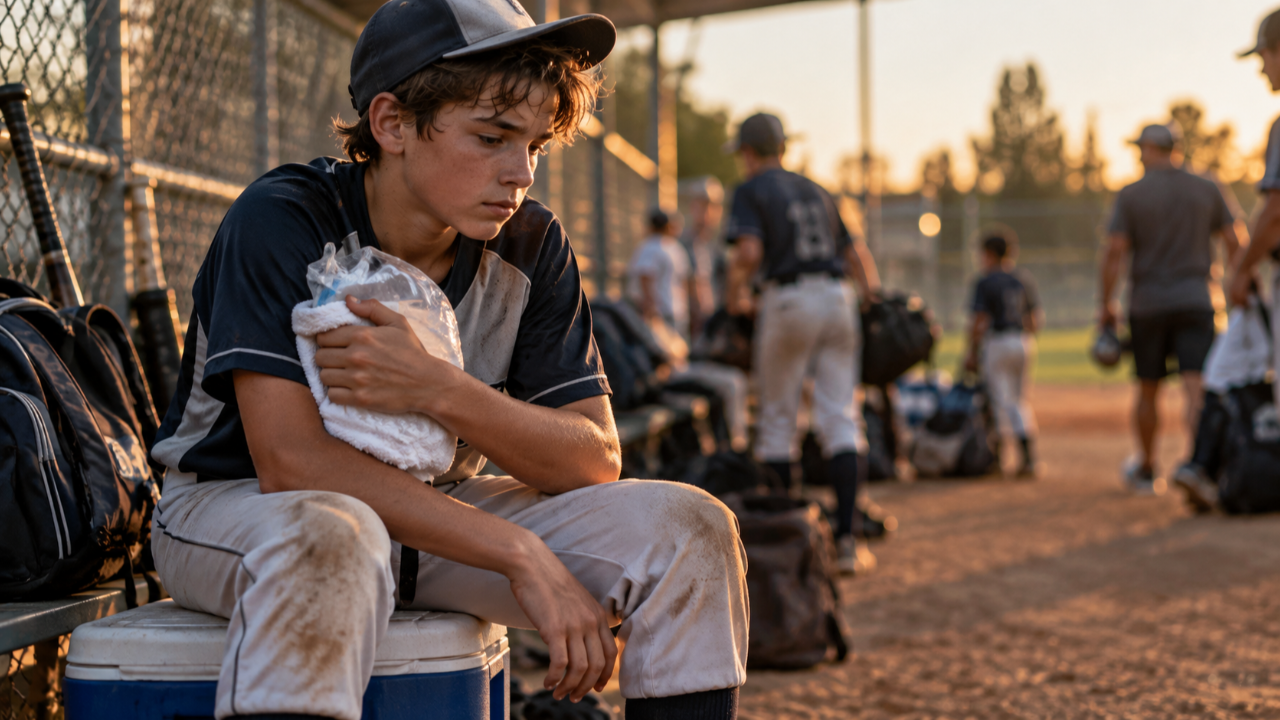
The bag of ice comes out before the car even leaves the parking lot. It's become part of the ritual — pitch, sit, ice. Nobody questions it. It's just what you do.
But ask where the habit of icing an arm after pitching came from, and most parents can't answer. That's not because it's wrong. It's because almost nobody ever explained it. It's just always been the routine.
This guide looks at where that habit started. It covers what the current evidence says about icing an arm after pitching. And it covers what to do instead, if you're not sure the ice pack is earning its spot in the routine.
I'm Joey Myers. I built VeloRESET because so much of youth arm care runs on inherited habit instead of an honest look at what helps — and icing is one of the clearest examples.
"Four seasons of buying bags of ice, and I still don't know if it does anything. I just don't want to be the parent who skipped it."
— Parent of a 14-year-old pitcher, travel ball
Should youth pitchers ice their arm after throwing?
The honest answer: the evidence doesn't clearly say yes, and it doesn't clearly say no either.
That's not a dodge. It's the actual state of the research. Icing an arm after pitching is one of the most common habits in youth baseball. It's also one of the least supported by strong, direct evidence, in either direction. There's no landmark study proving it speeds recovery. There's also no landmark study proving it causes harm in a young pitcher's arm specifically. What exists instead is a reasonable physiological argument against routine icing, one small supporting study with real limits, and a lot of inherited tradition sitting in the middle.
Where did the "always ice after pitching" habit actually come from?
Mostly from one photograph.
Sandy Koufax appeared in a 1965 Sports Illustrated photo with his arm packed in ice after a start. The image spread through baseball culture fast. Icing became the visible, official-looking thing a pitcher was supposed to do after throwing. It was a signal of taking recovery seriously, whether or not anyone had tested if it worked.
Around the same time, the RICE protocol — Rest, Ice, Compression, Elevation — became the standard advice for soft tissue injuries generally, athletic or otherwise. Coaches passed it down. Parents adopted it without question. Decades later, it's still the default. That's true even though the doctor who coined RICE has since said publicly that he no longer stands behind it.
What does soreness after throwing actually represent?
It's usually a normal repair process, not a problem to shut down.
Throwing places real, repeated stress on muscle, tendon, and connective tissue. That stress creates microscopic damage — not injury in the alarming sense, just the ordinary wear that comes from hard effort. The body responds with inflammation: increased blood flow, immune activity, and growth signals that begin repairing and strengthening the tissue. Soreness is largely the felt experience of that repair process starting up. It's uncomfortable. Within reason, it's also the system working as intended. For how to tell that ordinary soreness apart from something that needs attention, see youth pitcher arm soreness vs. pain.
Why do some experts now argue icing slows recovery?
Because ice restricts blood flow, and blood flow is exactly what the repair process depends on.
Cold narrows blood vessels. That's basic physiology, not a fringe claim. The concern is what less blood flow means for tissue trying to repair itself — fewer nutrients and immune cells reaching the area, and slower waste removal. Some experts also point to a "rebound" effect. Once the ice comes off and tissue warms back up, fluid can rush in and extend the inflammation rather than shorten it.
This reasoning is why a number of coaches, physical therapists, and even MLB organizations have scaled back or dropped routine post-throwing icing in recent years. Many now favor light movement or blood-flow-focused recovery work instead. The American Baseball Coaches Association has published this exact argument for coaches directly.
Is there any research that supports icing after pitching?
A little — and it's worth being honest about what it does and doesn't show.
One frequently cited study followed 16 collegiate pitchers through simulated outings, comparing icing against percussive massage. At the 48-hour mark, the icing group showed better external rotation strength. They also reported less soreness and better shoulder joint position sense than the percussion group. That's a real result, but a limited one. The sample was small. It compared ice to another recovery method rather than to doing nothing. And it studied college pitchers, not youth arms. It shows icing may beat one specific option — not that icing is necessary, or that it beats simply resting.
Why isn't there a clear answer either way?
Because the research that would settle this doesn't exist yet — a large, controlled study in youth pitchers.
Most of what's out there is small, adult or college-level, or based on general soft-tissue injury research rather than throwing-specific recovery in a still-developing arm. That's a meaningfully different question. A 12-year-old's growth plates are still open, and his arm isn't a scaled-down college pitcher's arm. What helps or hurts recovery in one population doesn't automatically transfer to the other. Anyone offering total confidence in either direction — always ice, or never ice — is overstating what the evidence supports right now.
Does this mean icing is harmful?
No — and that's an important distinction to hold onto.
The case against routine icing is a case against relying on it as the primary recovery tool. It isn't evidence that a bag of ice for 10 to 15 minutes is dangerous. If your pitcher finds it genuinely comforting after a long outing, occasional icing isn't something to feel anxious about. The more useful shift is in expectation, not prohibition. Stop treating ice as the thing that "does the recovery work." Start treating it as, at most, a short-term comfort measure that sits alongside the habits that matter more. This is separate from managing a real injury like Little League elbow — that calls for rest and an exam, not a decision about ice.
What actually helps a pitcher's arm recover, based on what we do know?
Sleep, hydration, light movement, and total workload management. None of these are as visible or ritual-feeling as pulling out an ice bag. All of them have far more consistent support behind them.
- Sleep: tissue repair and growth hormone release happen mostly during deep sleep. A pitcher who's short on sleep recovers slower no matter what he does with his arm afterward.
- Light movement: gentle motion the day after an outing — not rest, not more throwing — supports the same circulation that icing restricts.
- Hydration: basic, unglamorous, and consistently linked to tissue recovery and reduced soreness.
- Total workload awareness: tracking games, practices, bullpens, and casual catch together. This total-load thinking, covered in why pitch counts don't measure arm fatigue, does more for recovery than any single post-throwing ritual.
Not sure if this week calls for rest, or just recovery habits?
The 2-Minute Arm State Check gives you a Green, Yellow, or Red read on your pitcher's arm, and a clear recommendation for the week ahead.
Take the Check →What should parents actually do this week, given the uncertainty?
Don't treat this as a decision that needs to be perfectly right. Treat it as one small piece of a much bigger picture.
If icing is already the habit and your pitcher likes it, there's no strong reason to fight that battle. Just don't let it stand in for the things with better support, like sleep and workload awareness. If you're looking to simplify the post-outing routine, dropping the ice for five minutes of light movement is a reasonable, evidence-aligned swap. Either way, the bigger question isn't ice or no ice. It's whether you're watching how the arm responds from one outing to the next. See when a youth pitcher needs rest for what those signals look like.
What does this mean for how you think about arm care tools overall?
It means no single tool or ritual replaces paying attention.
Ice, heat, compression sleeves, recovery gadgets — they all get marketed as the thing that protects a young arm. None of them are. They're small pieces sitting around the actual work: noticing how the arm responds week to week, and adjusting from there. Picture a pitcher who ices religiously but never sleeps enough, and never has anyone tracking his total throwing load. He isn't more protected than one who skips the ice entirely and does those other things well. The ritual isn't the protection. The attention is.
Frequently asked questions about icing a youth pitcher's arm
Should youth pitchers ice their arm after throwing?
The evidence doesn't clearly support routine icing, but it also doesn't clearly show it's harmful. Icing is a long-standing habit with more tradition behind it than strong research. Occasional icing for comfort is reasonable; relying on it as the main recovery tool isn't well supported.
Does ice help or hurt recovery after pitching?
It depends on which evidence you weigh. Ice restricts blood flow, which some experts argue slows the natural repair process. One small study found icing beat percussive massage on certain 48-hour recovery markers in college pitchers. Neither side has strong, youth-specific, controlled research behind it.
Why do some coaches say not to ice anymore?
Because ice constricts blood vessels, and blood flow delivers the nutrients and immune activity tissue needs to repair itself. Some experts also point to a rebound effect, where fluid rushes back into the tissue once it rewarms. This reasoning has led some coaches, physical therapists, and pro teams to scale back routine post-throwing icing.
Is there research proving icing works?
There's limited supporting research. One often-cited study of 16 collegiate pitchers found icing beat percussive massage on strength, soreness, and joint position sense at 48 hours. It had no control group, studied college-age pitchers, and compared ice only to one other method, not to no treatment at all.
Is icing after pitching harmful?
Not in the way it's typically used. A short ice session for comfort isn't something to be anxious about. The concern from critics is about relying on icing as the primary recovery method, not about the occasional 10 to 15 minute session.
What's the difference between inflammation and swelling?
Inflammation is the body's normal, largely helpful repair response. It's increased blood flow and immune activity that helps rebuild stressed tissue. Swelling is extra fluid buildup, which can become uncomfortable or restrictive. The concern with icing is that it may blunt that helpful inflammation while trying to manage swelling, which isn't always the same problem.
What actually helps a pitcher's arm recover between outings?
Sleep, hydration, light movement the day after an outing, and awareness of total throwing workload across games, practices, and bullpens. These have more consistent support behind them than any single recovery ritual, including icing.
Is heat better than ice after pitching?
Some experts favor heat combined with light movement, since heat opens blood vessels rather than narrowing them. The evidence for heat as a clearly better option is also limited. The more consistent theme across the research is that active, blood-flow-supporting recovery tends to beat passive cooling, no matter the method.
Should a youth pitcher ice if his arm actually hurts, not just feels tired?
Ordinary post-throwing soreness and actual pain are different situations. This guide is about routine recovery habits after normal throwing, not about managing pain that could signal an injury. If your pitcher has real pain, especially at one spot like the inner elbow or shoulder, that calls for rest and a doctor visit, not a decision about ice.
You know what the evidence says about icing — now get a personal read on where his arm stands this week.
The Arm State Read walks through your pitcher's specific situation — what the signals mean for his arm right now, and what to do about them. Not a general guide. A read on his arm.
Get the Arm State Read →$27 · Personalized to his arm right now
VeloRESET provides educational information for parents of youth baseball pitchers. This content is not a substitute for evaluation, diagnosis, or treatment by a qualified medical professional. If your pitcher is experiencing real pain, not just normal post-throwing soreness, consult a sports medicine physician.