Your Youth Pitcher Was Cleared to Throw — But Is He Ready?
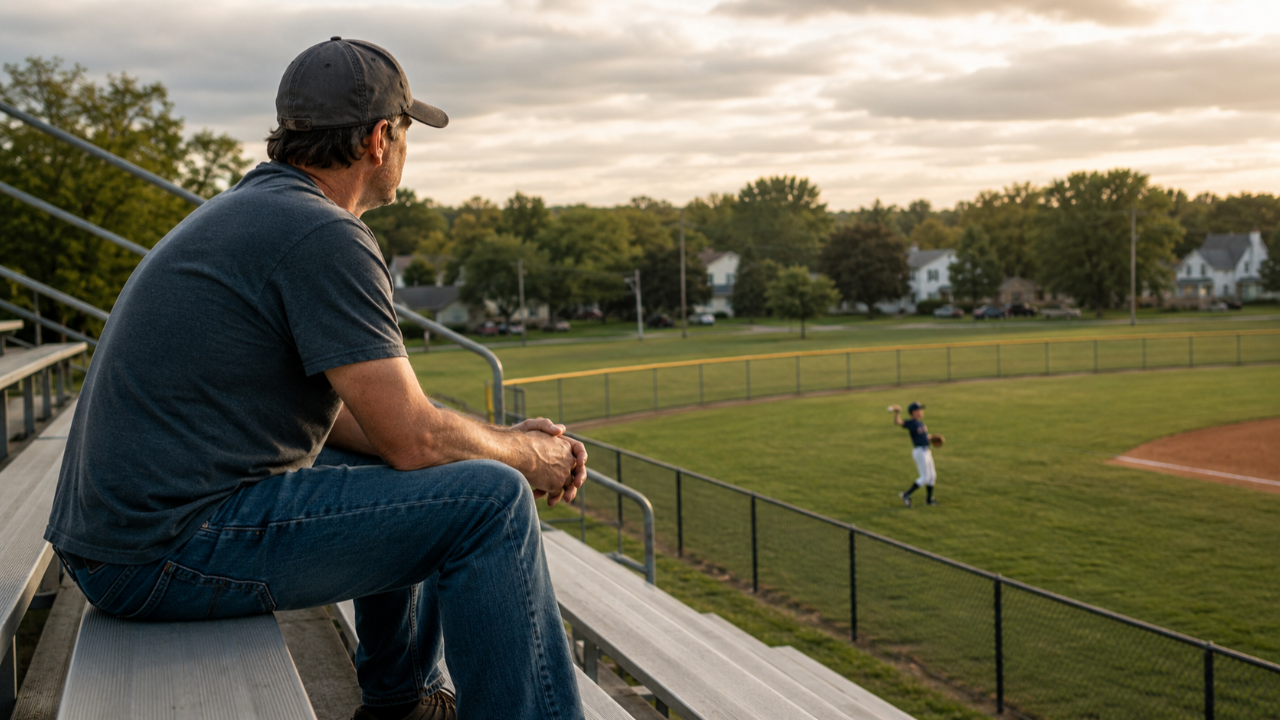
We’re following all the rules… so why does it still feel off?
You did everything right. Rest. Doctor. Imaging if they ordered it. You waited, you followed the timeline, and eventually you got the words you were hoping for: “He’s cleared to throw.”
And yet here you are, a week or two later, watching him warm up and thinking: “I don’t know if I’m being paranoid or if something’s actually wrong.” The arm looks hesitant. His velocity is not back. He says he feels fine, but something in the way he’s favoring it doesn’t sit right with you. Coach says he’s fine, but you’re not totally convinced.
You are not being paranoid. You are noticing a real gap — one that the medical system was never designed to close. Clearance tells you what is allowed. It does not tell you what is ready. Those are two entirely different questions, and only one of them matters for this week’s decisions.
This post is the definitive parent guide to understanding that gap — what clearance actually measures, what it systematically leaves out, and what to use instead. If you have landed here from one of our shorter pages on arm readiness vs clearance or because you are dealing with a pitcher who is cleared but still sore, this is the full picture behind both of those situations.
What Does “Cleared to Throw” Actually Mean?
Clearance means that a qualified professional has determined your pitcher’s injury has progressed to a point where throwing is no longer contraindicated. That is a precise, useful, and limited statement.
Here is what it is actually measuring: tissue status. Whether a ligament, growth plate, or muscle has healed to the threshold where stress is not likely to cause acute re-injury. That is the job of the evaluation, and within its scope, it does that job well.
Here is what it is not measuring:
- How much accumulated fatigue the arm still carries from before the injury
- Whether surrounding muscles have regained the strength and coordination they had before rest
- Whether the pitcher’s mechanics have subtly shifted to protect the soreness — a compensation pattern that often outlasts the pain itself
- How the arm responds to the specific stresses of competitive pitching, not just a functional movement screen
- Whether the pitcher feels confident enough to throw without bracing
Clearance is a green light to re-enter the process. It is not a green light to skip straight to game intensity. The medical evaluation ends where your week-to-week decisions begin.
Why Does “Cleared” Feel Like Enough — Even When It Isn’t?
Because it is the moment you have been waiting for, and the relief is real. After weeks of watching your kid sit out, any forward movement feels like the worst part is behind you.
It is also the last official handoff. The doctor, physical therapist, or athletic trainer hands the baton back to you and the coaching staff with that word — cleared — and the system assumes everyone knows what to do next. Most of the time, nobody does. The coach works with what he has. The pitcher wants to compete. And you are left trying to read signals you have never been taught to read.
This is not a failure of the medical process. It is a gap in what that process was designed to cover. The gap has a name: Cleared ≠ Ready.
Cleared means the acute phase is over. Ready means the arm can handle what you are about to ask it to do — this week, under these conditions, at this workload. Those two things can be separated by weeks, or more. Growth-plate injuries like Little League shoulder make this gap especially clear — imaging confirms healing, clearance is given, and yet the arm’s capacity to handle competitive pitching load takes weeks longer to rebuild than the paperwork suggests.
What Does Arm Readiness Actually Look Like?
Readiness is not a single moment. It is a pattern you build back, week by week, across multiple signals — not one signal.
Here are the categories that actually determine whether a youth pitcher’s arm is ready to handle a given workload:
1. Recovery Rate Between Sessions
After a throwing session, how long does it take for the arm to return to baseline? For a rested, well-managed arm, soreness from a normal bullpen is typically gone within 24–48 hours. If your pitcher is still reporting tightness or fatigue at 72 hours, the arm is not recovering at the rate the workload is demanding — regardless of what the clearance said.
2. Velocity Trend, Not Single-Session Numbers
A one-time velocity reading tells you very little. A trend tells you everything. Velocity can drop 2–5 mph before a parent or coach consciously notices a change, but it shows up consistently in back-to-back sessions when the arm is under-recovered. A pitcher who hits 72 one day and 67 the next, then 74 the following week, is showing you something. A steady climb back — even slowly — means something different.
3. Effort-to-Output Ratio
Watch how hard he is working to produce what he is producing. An arm that is truly ready generates velocity without visible effort changes. An arm that is still rebuilding often shows strain — extra hip and shoulder rotation to compensate for reduced arm strength, or a push-through quality to the delivery rather than a fluid release. This is subtle, and you may not be able to name it, but you can notice it. Trust that.
4. The “I’m Fine” Mask
One of the six patterns we track at VeloRESET is what we call the I’m Fine Mask: the moment a pitcher stops reporting honestly because he knows the alternative is being held out. This happens at all levels, but it is especially common in teenagers who have already sat out longer than they wanted to. The arm may not be ready, but the reporting stops. Watch behavior, not just verbal reports: does he shake the arm out between pitches? Does he avoid full extension in warmup? Is he self-limiting his effort when the coach is not watching?
5. The Confidence Signal
This one is harder to quantify, but parents usually read it accurately. When a pitcher trusts his arm, his delivery looks like his delivery. When he does not, something hesitates — footwork, hip drive, arm path. Confidence in the arm is a readiness signal, not just a mental state. It drops when the arm sends signals the pitcher has learned to distrust.
What Pitch Counts and Arm Health Guidelines Still Miss
Pitch count limits are the most widely adopted tool in youth arm health, and they are a meaningful starting point. They set a ceiling on volume, which matters. But they operate on an assumption that all pitches are created equal — that pitch 75 for a rested, fully recovered arm is the same as pitch 75 for an arm three weeks out of clearance during the second week of a tournament weekend.
They are not the same.
Pitch counts and arm health guidelines measure one variable: volume. Readiness requires reading multiple variables simultaneously — fatigue state coming into the session, recovery rate coming out of it, workload across the full week (practice, long toss, bullpen, and games combined), and physical signals that emerge during the outing. A pitcher can stay inside every pitch count limit and still be chronically under-recovered if no one is looking at the full picture.
This is not an argument against pitch counts. It is an argument for using them as a floor for conversation, not a ceiling on concern. When you are thinking about pitch counts and arm health in the post-clearance window, add the recovery questions on top of the volume limits, not instead of them.
Why Youth Pitcher Arm Pain Comes Back After Clearance
Youth pitcher arm pain returns after clearance for one of three reasons, and understanding which one you are dealing with changes everything about how you respond.
Reason 1: The arm was returned to full workload too quickly. Clearance does not mean full workload. It means re-entry is safe. A ramp-back period — typically 4–8 weeks depending on what the injury was — is supposed to follow clearance. When that ramp gets compressed by a tournament schedule, a coach who needs innings, or a pitcher who has been sidelined long enough to stop being cautious, the arm absorbs stress it is not yet prepared for. The result is often a return of youth pitcher arm soreness that mirrors the original complaint.
Reason 2: A compensation pattern was never addressed. When an arm hurts, the pitcher adjusts. He shortens his arm path. He drops his elbow. He shifts his hip timing to take load off the sore spot. These adjustments become habit during the injury period and often persist after clearance, even when the original pain is gone. The compensation then creates a new stress point — and the parent is left with youth pitcher arm pain in a different location, wondering how it happened again.
Reason 3: The original load never actually decreased enough. Rest is relative. “No pitching” during rest periods sometimes means continued throwing in lessons, long toss on the back field, or light bullpen work that coaches do not formally categorize as pitching. The arm hears all of it. If the rest period was not true rest — meaning reduced total throwing load, not just no game appearances — the tissue may have been cleared before it was fully recovered.
If you are dealing with return to play that doesn’t feel right, one of these three patterns is usually at work. Naming which one helps you decide what to do about it — and just as importantly, what not to do.
For pitchers returning from UCL repair — where the ramp-back to full competitive throwing is 12–18 months rather than 4–8 weeks — all three of these failure modes apply with heightened urgency. Understanding what that recovery arc looks like, and what signals parents can track along the way, is the subject of the full guide to Tommy John surgery: what parents need to know before it’s even a conversation.
The Green / Yellow / Red Readiness Spectrum
At VeloRESET, we replace the binary cleared/not-cleared frame with a three-zone readiness picture. The goal is not to override a medical evaluation — it is to give you a decision tool for the weeks after it that the evaluation was never designed to provide.
Green: The arm is recovering at the rate workload demands. No soreness beyond 24–48 hours. Velocity trend is stable or climbing. Effort-to-output ratio feels normal. Pitcher is reporting honestly. Workload can hold or progress modestly.
Yellow: One or more signals are off. Soreness is lingering past 48 hours. Velocity is down two sessions in a row. Effort looks elevated. The pitcher is quieter than usual about how his arm feels. This is not an emergency, but it is a week to hold workload steady or reduce it, not to push.
Red: Sharp or sudden pain during a throwing session. Sudden velocity drop mid-outing (not across sessions — during one). New or unfamiliar location of discomfort. The pitcher stops mid-throw. Any of these means stop the session and involve a medical professional before the next throwing activity. Red is not a readiness question anymore — it is a medical question.
Most of what parents navigate in the post-clearance window is Green-Yellow territory. The framework does not change what is medically indicated. It changes whether you are making this week’s workload decisions with information or without it.
The Decision You Are Actually Making Every Week
Every week of a pitching season, you are making one of three decisions: push, hold, or reduce. Those decisions are not made at the doctor’s office. They are made on the drive to the field, in the warmup, between innings, and in the car on the way home when your kid says “my arm’s fine” and you are not sure whether to believe him.
The VeloRESET Decision Loop gives you a structure for those moments: Notice what is changing (soreness timing, velocity, effort, mood around throwing) → Understand what it might mean (recovery lag, compensation, genuine progress) → Adjust the workload accordingly (hold steady, ramp up, or pull back) → Support recovery deliberately (sleep, nutrition, arm-down days as actual rest).
It is not a replacement for a medical evaluation. It is what happens between evaluations, which is where the actual decisions live.
For a deeper look at how to map your specific situation, the Arm Care Decision Hub is the right starting point.
Not sure if your pitcher is actually ready — or just cleared?
The free Arm State Check takes about 2 minutes and gives you a clear picture of where his arm actually is right now — not just what the paperwork says.
Take the Free Arm State CheckTakes about 2 minutes. No purchase required.
Frequently Asked Questions
How long after being cleared to throw should a youth pitcher wait before pitching in a game?
There is no single right answer, but returning to game pitching typically takes 4–8 weeks after clearance, depending on the nature of the injury and how the ramp-back period goes. Clearance marks the start of the return-to-throw process, not the end of it. Most re-injury happens when pitchers return to game intensity within the first 1–2 weeks of clearance, before the arm has had time to rebuild workload tolerance. A conservative rule: the arm should complete at least two full bullpen sessions — with normal recovery between them — before returning to game competition.
My youth pitcher says his arm feels fine, but I’m still worried. Am I overreacting?
Probably not. “I don’t want to overreact, but I also don’t want to ignore it” is one of the most common things parents in this situation say — and it usually reflects accurate instinct, not paranoia. Teenagers, especially those who have been held out, often underreport soreness to avoid sitting again. Watch for behavioral signals alongside verbal ones: shaking the arm out between pitches, avoiding full extension in warmup, or a delivery that looks slightly different from his normal one. Those are data points too.
What is the difference between youth pitcher arm soreness and a real warning sign?
Normal post-outing soreness is diffuse, mild, and gone within 24–48 hours after a throwing session. A warning sign is sharp or sudden pain during a session, soreness that is still present at 72 hours or beyond, or discomfort in a new or unfamiliar location. A velocity drop that happens mid-outing (not across sessions) is also a flag worth pausing for. The distinction between normal soreness and a real warning sign is not always obvious, which is exactly why a consistent week-to-week readiness picture matters more than single-session reports.
Can pitch count limits alone prevent youth pitcher arm injuries?
Pitch count limits reduce volume-driven overuse, which is a meaningful contribution to youth pitcher arm injury prevention. But they do not account for cumulative fatigue across a full week of throwing (practice, long toss, bullpen, and games combined), pre-existing under-recovery, or compensation patterns in mechanics. A pitcher can stay within every pitch count guideline and still be chronically under-recovered if the arm is not getting genuine rest between sessions. Pitch counts are a starting point for the conversation, not the whole answer.
What should I do if my pitcher was cleared to throw but the return to play doesn’t feel right?
Trust that feeling enough to slow down. “Doesn’t feel right” usually means one of three things: the ramp-back was too fast, a compensation pattern is creating new strain, or the rest period was not as complete as it needed to be. None of those situations requires panic, but all of them require attention. Hold the current workload steady for at least a week while you observe the specific signals — recovery time, velocity trend, effort level, and what your pitcher is and is not reporting. If soreness is still present or worsening after a held week, loop the medical provider back in before progressing.