
The Beyond Pitch Counts Book + Companion Tools
We’re following all the rules… so why does it still feel off?
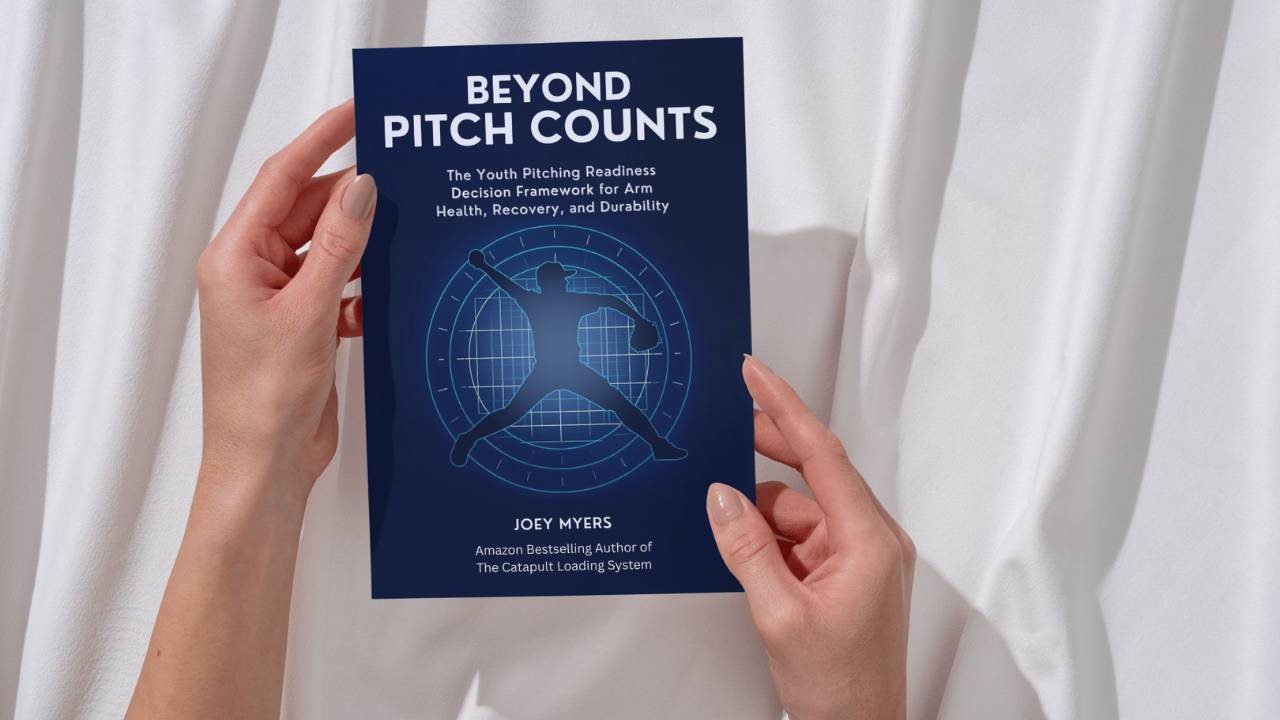
You stayed under the pitch count, and his arm still feels sore. The Beyond Pitch Counts book is a 406-page parent’s guide to what pitch counts leave out: workload, recovery, growth, and readiness, explained in plain language.
Secure checkout · Ships to US addresses · Printed on demand
Sound familiar?
Why does his arm still feel off when we stayed under the pitch count?
Because a pitch count measures volume, and soreness can come from far more than volume. If you’ve thought any of these, this book was written for you:
- “He stayed under the pitch count… so why is his arm still sore?”
- “I don’t know if I’m being paranoid or if something’s actually wrong.”
- “His velocity dropped after rest and now we’re second-guessing everything.”
- “Coach says he’s fine, but I’m not totally convinced.”
- “We’re getting completely different advice from coaches and lessons.”
Pitch counts were built to prevent extreme overuse. They were never meant to explain the full picture of throwing workload, fatigue, growth, and recovery. See why pitch counts miss arm fatigue. Groups such as the American Sports Medicine Institute have long listed fatigue and overuse among the main risk factors for young pitchers.
The Beyond Pitch Counts book was written for the moment the rules stop feeling clear.
Inside the book
What’s inside the Beyond Pitch Counts book?
Ten short chapters that move from why “safe” pitch counts mislead, to how workload and recovery really work, to a simple readiness decision framework you can use week to week.
Chapter 1
The Problem With “Safe” Pitch Counts
Why staying under the number doesn’t always mean the arm is protected, and the better question to ask: is the arm ready?
Chapter 3
Workload Is More Than Volume
Why 60 easy throws aren’t the same as 60 max-effort throws, how multi-team and showcase stacking adds hidden stress, and a simple habit for tracking total throwing days.
Chapter 4
Growth Spurts and Coordination Gaps
Why adolescence temporarily changes mechanics, what to watch without overreacting, and why patience protects durability. More on growth spurts.
Chapter 5
Recovery Sequencing Matters
Why rest alone isn’t enough, how to structure high-intent and low-intent days, and the subtle signs the arm hasn’t caught up yet.
Chapter 6
Readiness vs. Clearance
Why medical clearance is only step one, and how to sort pain, soreness, and fatigue in the gray-area moments. Readiness vs. clearance explained.
Chapter 9
The Readiness Decision Framework
Four steps: assess the starting point, evaluate today’s demand, plan recovery sequencing, and zoom out to long-term capacity.
Also inside: how throwing injuries actually happen (Chapter 2), the long game of durability (Chapter 7), common parent dilemmas like “he’s under the limit but still sore” (Chapter 8), and moving from awareness to action (Chapter 10).
- The Problem With “Safe” Pitch Counts
- How Throwing Injuries Actually Happen
- Workload Is More Than Volume
- Growth Spurts and Coordination Gaps
- Recovery Sequencing Matters
- Readiness vs. Clearance
- The Long Game of Durability
- Common Parent Dilemmas
- The Youth Pitching Readiness Decision Framework
- Moving From Awareness to Action
From VeloRESET parents
What does it feel like to stop guessing?
Two parents describe it in their own words.
“What I appreciate most is not being in a guessing game. We’re not just waiting and hoping. We understand what we’re seeing.”
George R., Josh’s dad · pitcher & middle infield, high school freshman“What I appreciate is that we’re not just waiting and hoping. We know what we’re looking at.”
Richard, Javier’s dad · sophomore catcherThese are comments about working with Joey and the VeloRESET approach, not reviews of the book. Individual experiences. Not medical advice.
Ready to stop guessing?
Get the Beyond Pitch Counts book and your four companion tools. $12 plus $8 shipping, $20 total, backed by a satisfaction guarantee.
Yes — Ship My Book →Included with your book
What companion tools come with the Beyond Pitch Counts book?
Four ready-to-use companions that the chapters refer to. You’ll find them on the page right after checkout, and your confirmation email links there too, so you can start while the book ships.
Tool 1
Weekly Workload Awareness Template
A one-page weekly reflection: what your pitcher actually threw across games, bullpens, lessons, and showcases, plus recovery context and arm signals, so patterns show up early. It isn’t a scoring system.
Tool 2
Readiness Spectrum Visual
A one-page visual of the Green / Yellow / Red readiness spectrum, so soreness stops being a yes-or-no question.
Tool 3
Growth Phase Adjustment Brief
How rapid growth changes coordination, recovery timing, and workload interpretation, and why a growth phase calls for interpretation, not panic.
Tool 4
Companion Audio Episode
A private 10–12 minute episode, “Under the Limit But Still Sore,” for the days you’d rather listen than read.
Straight from Joey
Why is the book only $12 plus shipping?
Fair question, and you deserve a straight answer. Here are the three honest reasons.
Parents are guessing, and that isn’t fair to them
Most parents I talk to are doing everything right and still don’t know if they are. I’d rather this book land in your hands than sit behind a full retail price.
I wrote the book I wish I’d had
When my own son had arm pain during a growth phase, I had to dig through biomechanics, workload patterns, and movement science to understand what was happening. This book is the shortcut I wanted then.
I’d like a place in your toolkit
By getting this book into your hands, I earn a little trust. If it helps you think more clearly, you may find the free 2-Minute Arm State Check or the Arm Lab newsletter useful later. If not, you still have a book that stands on its own.
Our Satisfaction Guarantee
If the book isn’t the right fit for your family, send me a one-line email and I’ll refund your $8 shipping. You keep the book. You keep the companion tools. No questions asked, no hard feelings.
Here’s everything you get today
For $12 plus $8 shipping, everything below ships to your door or lands in your inbox when you order.
Secure checkout · Ships to US addresses · Printed on demand
Not ready yet? Read a free chapter first. Prefer Kindle or audio? Find it on Amazon.
Questions? Answered.
Common questions about the Beyond Pitch Counts book
Is this book only for pitchers with arm pain?
No. The book is for parents who want to understand youth pitching arm health before soreness, fatigue, or confusion turn into bigger problems. It’s just as useful for prevention as it is for interpreting issues that already showed up.
Will this help if my pitcher stays under the pitch count but still gets sore?
Yes. That exact scenario is one of the central ideas in the book. Beyond Pitch Counts explains why soreness can still happen when the numbers look “safe,” and how to think about workload, recovery, and readiness more clearly.
Is this written for parents or coaches?
It’s written primarily for parents, in plain language. Coaches will still find it valuable, but the tone is built for families trying to make calmer, smarter decisions during real baseball seasons.
Do I need a medical or biomechanics background to understand it?
No. The book translates sports science, movement principles, and workload research into short, clear chapters that make sense without technical jargon. Each chapter covers one idea at a time, so you can read at your own pace.
How much does the Beyond Pitch Counts book cost, and when will it arrive?
Ordering here costs $12 plus $8 shipping, or $20 total, for US addresses. Each copy is printed on demand and typically arrives about 2 weeks after you order. Kindle and audiobook editions are sold separately on Amazon.
What happens after I place my order?
You’ll get an order confirmation email right away. Your four companion tools are on the page you land on right after checkout, and your confirmation email links to them too, so you can start while the book is on its way.
What if the book isn’t the right fit?
Send one short email and you’ll get a refund of your $8 shipping. You keep the book and the companion tools. The guarantee is as simple as it sounds.
Printed on demand
Ready for a calmer way to decide?
Get the Beyond Pitch Counts book and your companion tools. $12 plus $8 shipping, backed by a satisfaction guarantee.
Ship My Book →Secure checkout · Ships to US addresses · Printed on demand
© 2026 VeloRESET.com | About · Privacy · Terms · Disclaimers · Contact
VeloRESET is educational and does not replace medical care. Results shown are individual experiences.